by CMG Adrienne M
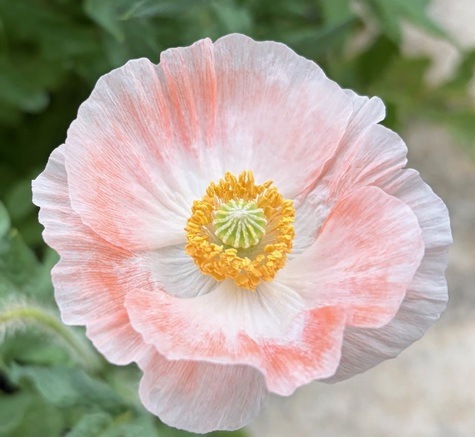
Pink Poppy Volunteer from CMG Ronnie K
Mama was my greatest teacher, a teacher of compassion, love and fearlessness. If love is sweet as a flower, then my mother is that sweet flower of love. ~Stevie Wonder~
Mother’s Day is Sunday, May 10. Flowers from your garden can go a long way in saying “Thank You” to any mother, a kind neighbor, a friend, or the nurse down the street who has been working extended shifts for the past several weeks. Make someone’s day with a kind gesture!
- “Growing Herbs in Texas” or the Comal County Gardening Guide are useful guides for growing herbs in the garden or containers. It is possible to have a garden full of different basil plants, each with its own growing style, taste and scent. Examples include Everleaf Emerald Towers, which has a tall, slim profile, and Lettuce Basil, which is compact in size and has leaves that are large, floppy and wrinkled. Balsamic Blooms basil has a large rounded shape about 18-20 inches in height and edible flowers which can be chopped and sprinkled over salads. Pollinators love basil flowers!
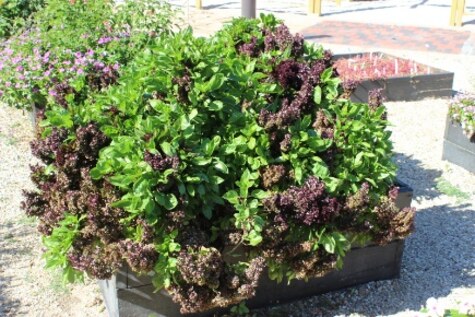
Balsamic Blooms Basil a Texas Superstar® since 2017 from TxAgriLife by Dr. Brent Pemberton
- The most common type of basil is Sweet Basil, both Italian and spicy-sweet Greek, but the list of other varieties is extensive. It includes: Purple basil, which is spicy and less sweet than the Italian and Greek; Thai basil, which has a strong licorice flavor; and Holy Basil, with its spicy sweet musky scent. Some of the other varieties and flavors are: African Blue, Green Ruffles, lemon, cinnamon, lime, Genovese, Spicy Globe, Thai Sweet basil and Siam Queen. More on culinary basil.
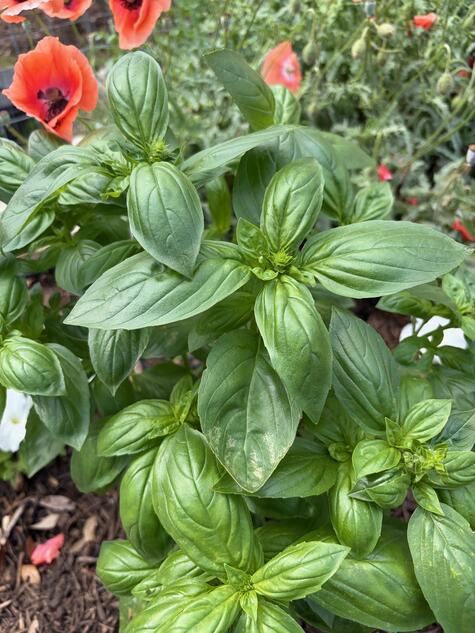
Sweet Basil from CMG Ronnie K
- Many of our bright, yellow-to-red summer flowers come to us from countries that are south of our border. Mexican bush marigold, also called Copper Canyon Daisy, is a three-foot perennial that bears bright yellow flowers in cycles throughout spring and summer and often into fall. It needs only light watering and is deer-resistant. Butterflies love it!
- Mexican honeysuckle (Justicia spicigera), also known as firecracker plant, is a small, lush shrub that bears a profusion of small orange tubular flowers for up to nine months, if given adequate water and part shade. Because it is a native to Mexico and Central America, its roots must be protected in our area during a hard freeze. Prune its woody stems at winter’s end, and it should begin blooming in the spring.
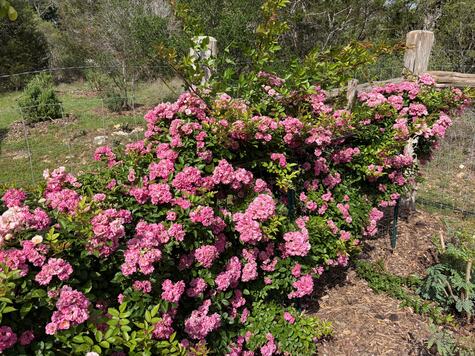
Peggy Martin Rose from CMG Ronnie K
- Caladium corms should be planted now, as the soil is warming and night temperatures are above 60 degrees. Caladiums thrive in loose, well-drained soil augmented with plenty of organic matter. Their mixed-color leaves of green-with-white, -pink or -red make a striking display in a shady area that receives dappled light.
- Lawns of Southern grasses such as St. Augustine and Zoysia require 1 inch of water a week during the spring. If Mother Nature doesn’t cooperate, give the lawn a deep soaking, rather than several light sprinkles with a hose. These warm-season grass lawns will benefit from some aeriation with a gardening fork in any areas that receive constant water run-off.
- This is also the time to repair damaged lawn areas by using grass patches or by reseeding. Follow with a slow-release nitrogen fertilizer to encourage slow, steady growth.
- Temperatures of over 70-degrees at night can interfere with the pollination and fruit-set of many vegetables. It’s best to get corn, beans, peppers and cucurbits in the ground during the first part of this month for best fruiting results. Southern peas, eggplant and okra will continue to set fruit through the summer.
- Tomatoes should be growing nicely now, especially if they are in full sun. Before they get too large, surround each of the tomato plants with a tomato cage or place supporting stakes near the plants. Mulch is important to prevent water loss once the weather gets hotter. (Dr. Calvin Finch, Ph.D., Horticulturist and Director Texas A&M Water Conservation and Technology Center, prefers oak leaves.)
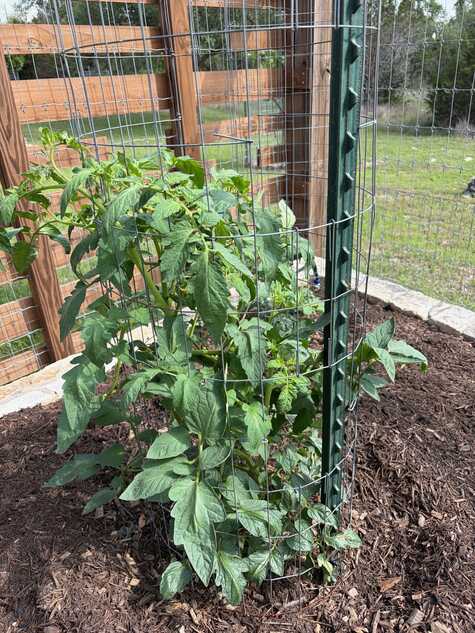
Caged Tomato from CMG Ronnie K
SOURCES: Month-By-Month Gardening in Texas; A Year in the Garden (Magnolia Mound Plantation); The Southern Living Garden Book; NeilSperry’s Complete Guide to Texas Gardening. ONLINE: bexar-tx.tamu; milberger; milorganite; bonnieplants; provenwinners.
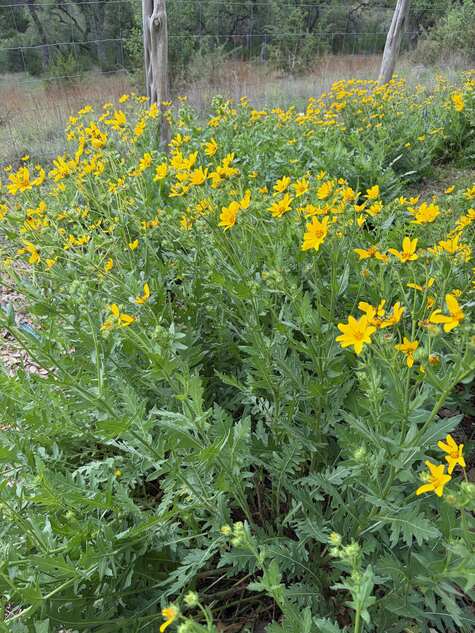
Engelmann’s Daisy, a Texas Wildflower from CMG Ronnie K