By CMG Ronnie K
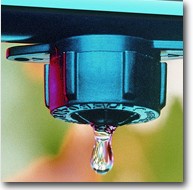
Drip Irrigation from usda.gov
With the hot dry weather I’ve spent a lot of time watering my flower garden with bucket, hose and spray irrigation. To lessen my watering time I expanded my faucet drip irrigation system from just new plants to nearly every plant. More bubblers equal happy plants. That is, until the ¼” tubing system got overwhelmed. Yes, I added too many bubblers. The correction was a little work and required additional tubing to re-plumb the system with a ½” mainline and ¼” tubing running to plant groupings. Success!
The project had me thinking about a comment a gardener friend made that the Israeli’s invented drip irrigation. At the time that just didn’t seem right. Given the varieties of irrigation options from pipes to tapes to emitters, I could not image just one person or one country inventing or developing drip irrigation. Drip irrigation systems available today are highly sophisticated and cool.
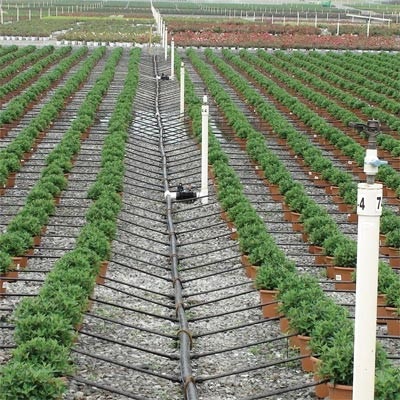
Commercial Installation of Drip Irrigation from farmtek.com
That had me Googling. I found that Simcha Blass, an Israeli engineer, is known as the creator of modern drip irrigation in Israel. He was able to patent an emitter and through his leadership in the Israeli water department and as a private citizen led people to heavily use drip irrigation. There’s a lot to admire in his work. Yet, he’s not the inventor of drip irrigation.
Drip irrigation has been found in ancient civilizations including China and South America. The earlier practitioner’s buried unglazed pots or ollas in the soil, filled them with water and capped them. Water wept through the porous clay pots when the soil was dry and did not when it was wet. The pot was refilled as needed. That’s magical!
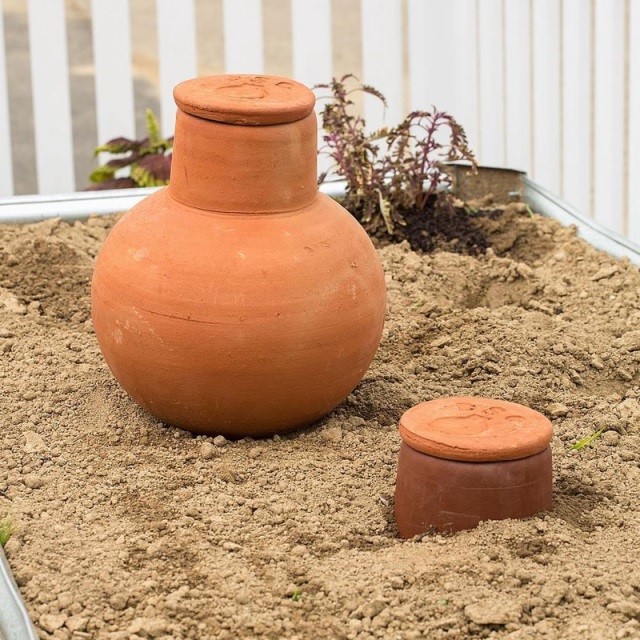
Ollas from lehmans.com
Many other folks around the world from multiple countries developed the technology with no person known as the inventor. Many devices came with the advent of plastics in the 1950’s and beyond. The use of drip irrigation expanded with this cheap resource to make tapes, bubblers, emitters, weepers, quick connects, pipes, tubes, timers, valves, etc. All are very clever and really neat, even though they make everything wet. It’s amazing!
As with many things there are tradeoffs and challenges with drip irrigation. Drip systems require maintenance to assure adequate flow, repair damage from gardeners or pests and to replace plugged parts. It increases the soil salinity and doesn’t water in top dressed fertilizers, both require some type of mitigation. Evaporation and runoff losses are reduced or nearly eliminated with drip irrigation. Ninety percent of the water that is used gets to where it’s wanted, i.e. to the plants and not the weeds. The resulting water savings is 30-60% relative to sprays. Wow!
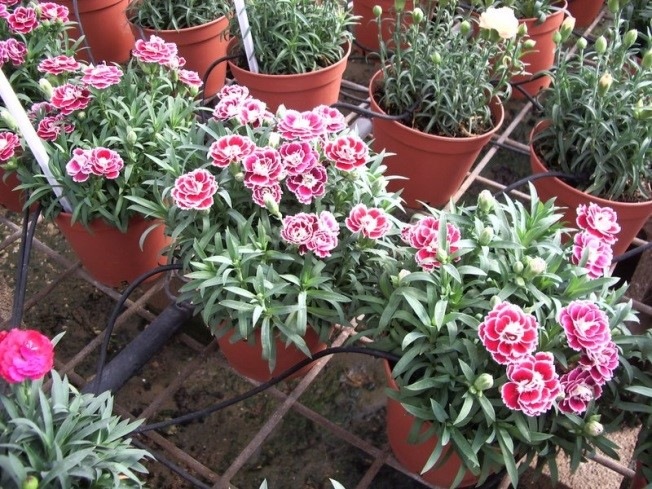
Dianthus in a greenhouse from timeofisrael.com
Israel is a large producer and exporter of cut and potted flowers and fresh produce. Image that. Israel is a desert! It’s only through the use of drip irrigation that they can produce these products. While many people helped engineer drip irrigation systems, you can’t help but admire what the Israeli’s have done with it.
Drip irrigation is something that works well here in Comal County too. The best way to learn about it is to give it a try. An easy way to get started is to buy a kit marketed for pot irrigation from a garden spigot. It can be used for pots or a small number of plants. Install that and it will automatically expand your thinking on drip irrigation. The Agrilife Vegetable and Rose Garden and the Office Gardens put it to good use. To learn more about drip irrigation give them a visit or Google away. In the meantime stay hydrated and cool. Happy watering!!
Sources: aggie-horticulture.tamu.edu; usda.gov; flowers-israel.net; Wikipedia.org; hasbarafellowships.org; agrivi.com; web.uri.edu