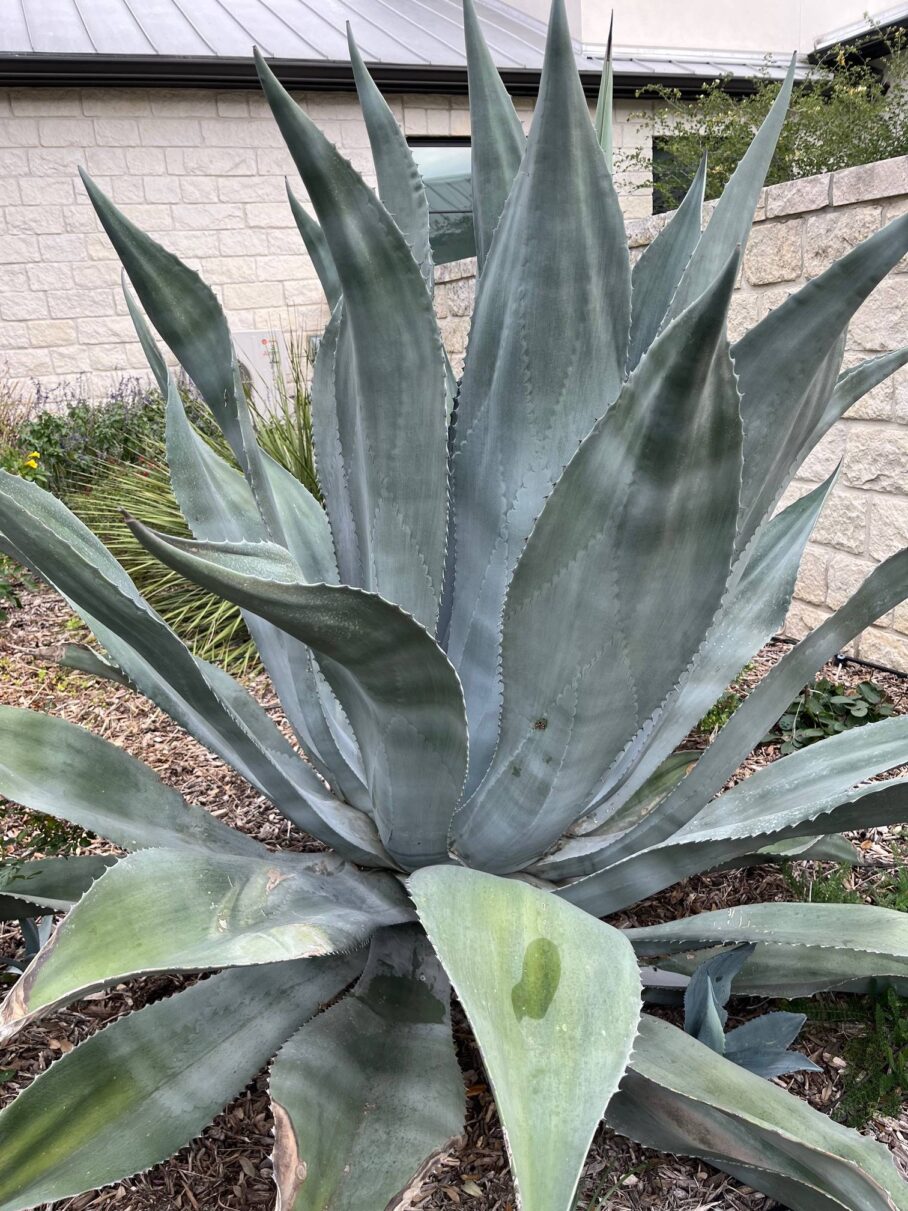
Agave
by CMG Kathleen S.
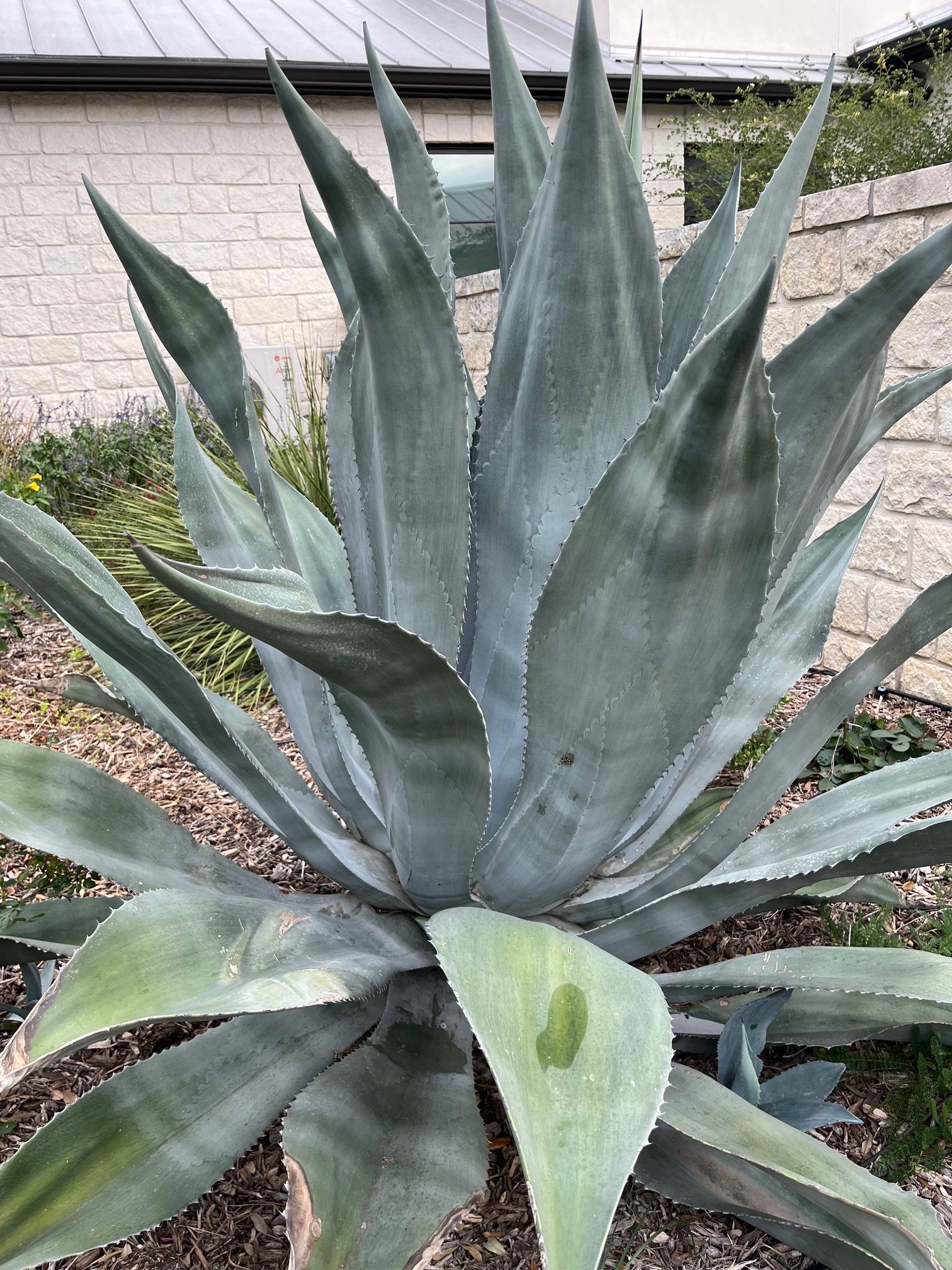
Blue Agave (Agave tequilana) _ Photo by CMG Ronnie
A recent 60 Minutes segment titled “The Mezcaleros” highlighted the cultural and agricultural significance of mezcal, a distilled alcoholic beverage made from agave. Mezcal production reflects centuries-old Mexican traditions and celebrations, while today’s growing global demand has led to expanded agave cultivation. Beyond spirits, agave remains one of the most versatile plants used by Indigenous peoples of North America, who historically utilized nearly every part of the plant.
Agave is a genus of approximately 250 species, ranging from small, plate-sized rosettes to dramatic specimens exceeding 10 feet in height, with widths typically between 1 and 10 feet. Tequila is produced exclusively from blue agave (Agave tequilana), while mezcal may be made from several agave species.
Sweet agave nectar is derived from the sap extracted from the plant’s core, or piña. This sap is filtered and cooked into a sugar commonly used as a sweetener and honey substitute. Recipes using sweet agave nectar can be found in Naturally Nutritious by Dr. Nicole Kurland, available at the Bulverde Library. Additional agave-derived products include soap, needles, thread, and a traditional form of paper.
Despite its many uses, agave requires caution when handled. The plant is toxic to horses, cats, dogs, and humans. Common injuries include puncture wounds from the sharp leaf spines and skin irritation from plant sap. Gardeners should avoid touching their eyes after handling agave and wear protective gloves and eye protection when working near mature plants. Only specific agave parts are edible, emphasizing the importance of correct identification and preparation.
Agave offers exceptional architectural interest, providing contrast and visual drama in both residential and public landscapes. These plants thrive in full sun (a minimum of six hours daily) and require light, well-drained soil amended with sand and rock. Slightly acidic soil is preferred. Once established, agave is highly drought tolerant and does not require fertilization.
Agave is suitable for USDA Hardiness Zones 8–9, though plants must be protected from winter frost. Depending on species and size, agave can be grown in containers and even used as houseplants, provided adequate light and drainage are maintained.
Agave is monocarpic, flowering only once in its lifetime—typically between 10 and 25 years—after which the parent plant usually dies. In some species, bulbils (small plantlets) may form along the flowering stalk and can be harvested for propagation.
Many species, particularly Agave americana, spread aggressively by producing pups (offsets) around the base. Growth can be controlled by removing these pups. For best results, allow pups to remain in a shaded area for several days to form a callus on the cut surface, then pot them and keep indoors for a few weeks before planting outdoors. Agave can also be propagated from seed.
Agave is relatively pest resistant, but several issues warrant attention:
- Agave snout weevil – Larvae feed on roots, often causing severe damage before symptoms are visible.
- Spider mites – Tiny and difficult to detect; feed on plant sap and cause leaf stippling.
- Scale insects – Leave a sticky residue on leaves, encouraging secondary fungal issues.
Integrated pest management strategies are recommended. Treatments include insecticidal soap, neem oil, and beneficial insects such as lady beetles and lacewings. Chemical pesticides should be used only as a last resort.
The North American Agave Council serves as an advocacy and educational organization, promoting sustainable cultivation practices and public awareness of agave’s cultural, ecological, and economic importance. To learn more click here.
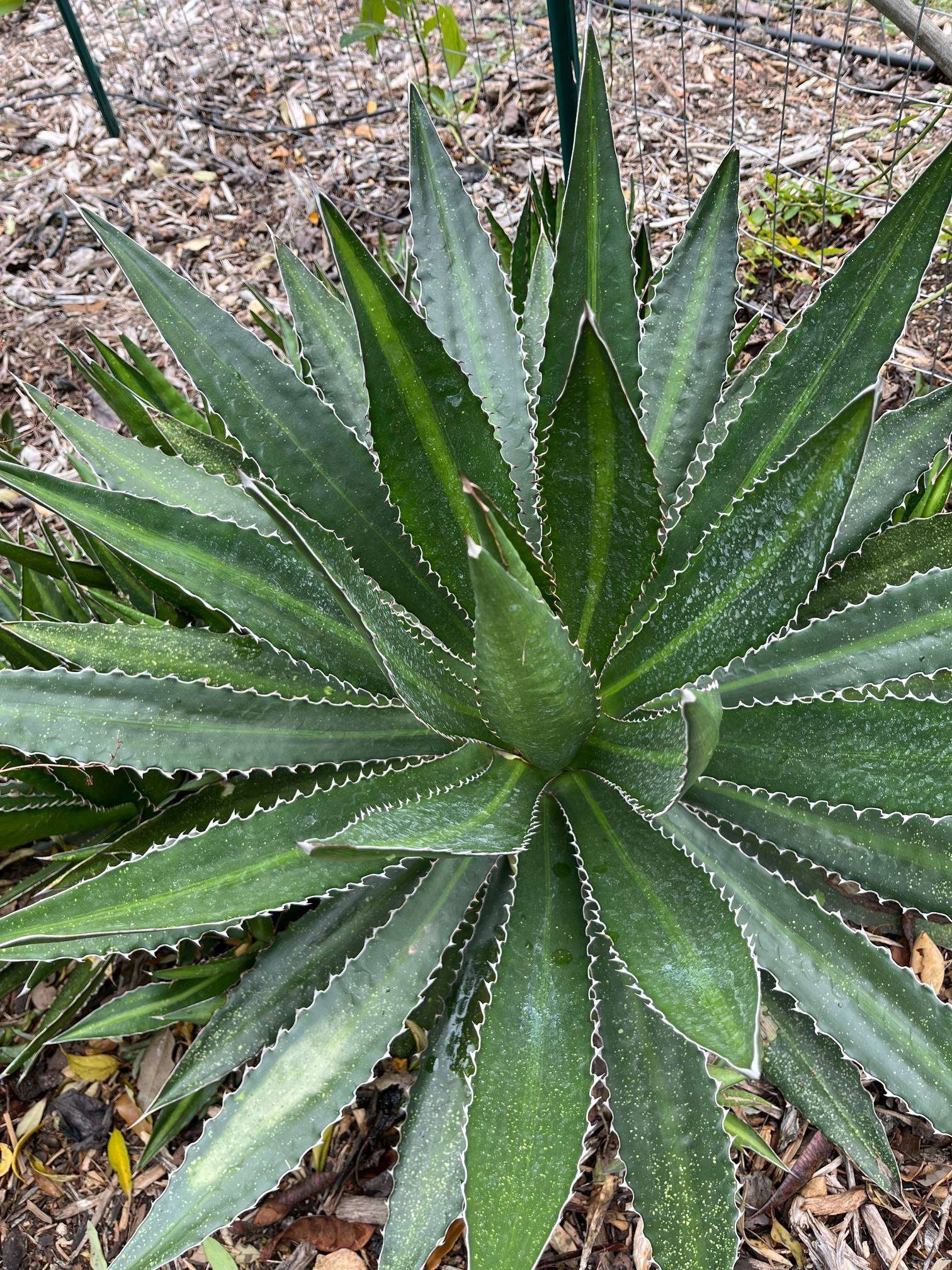
Agave Univittata_ photo by CMG Ronnie
References:
60minutestonight.com, en.wikipedia.org, basmati.com, shuncy.com, theSpruce.com, livetoplant.com