by CMG Betty J
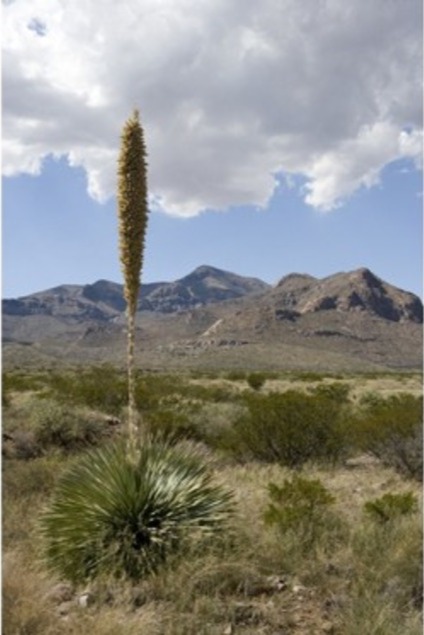
Texas Sotol from wildflower.org by Al Braden
Texas Sotol, Dassylirion texanum, is a cactus of the Agave family. Also called soto root, soto grass or wild artichoke, it was a food source for the Lipan Indians and early Texas settlers. The large, bulbous root was roasted and ground into flour. Today, sotol leaves and the plant heart are used as an emergency food source for deer and javelinas. The tender new stalks are a favorite food of local deer. Sotols’ native range extends from New Braunfels, Texas west to Fort Davis, Texas.
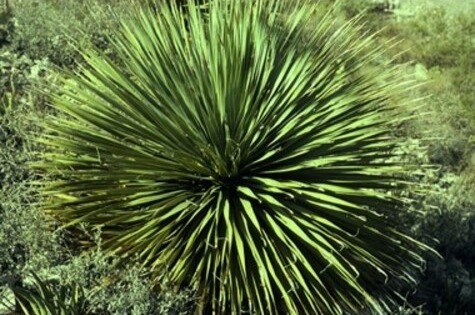
Texas Sotol Plant from wildflower.org by Wynn Anderson
Sotol prefers sandy soil, caliche or limestone-based soil. Being both cold and heat tolerant, they can grow in most sunny locations in the Hill Country and are found locally in prairies, meadows, savannas and brushy areas. The dominant flower stalk often grows up to 15’ tall and yellow flowers cover the top third of the stalk in June and July. Pollinated flowers mature into capsules with three wings and one seed.
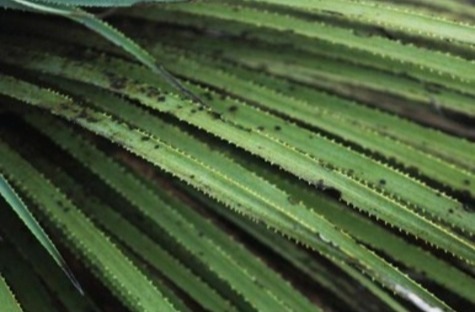
Sotol Leaves from wildflower.org by Mia Brakebill
The leaves are flat, slender and about three feet long with evenly spaced claws on both edges, all curved toward the leaf tip. The broad bases of the leaves are hidden deep within the leaf clump. There is a short stalk beneath the leaf clump that often splits open during dry spells, allowing wildlife to access the spongy interior and leaf bases.
Texas Sotol is easily grown in residential or commercial gardens and their striking profile makes them a good choice for rock gardens and xeriscape landscapes. They are sometimes used as a security hedge. Plants are available commercially.