by CMG Vickie C
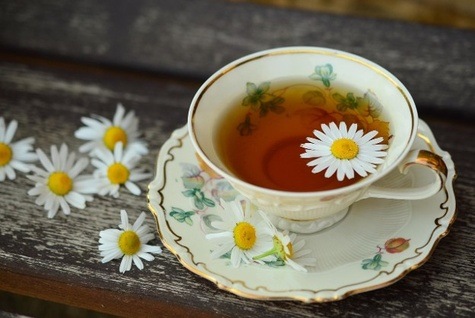
Chamomile from Pixabay.com by congerdesign
Chamomile is one of the most widely used herbal teas in the world. Egypt is the top producer and exporter of this herb. There are two main types of chamomiles used for tea or tisanes: German chamomile (Matricaria chamomilla) and Roman chamomile (Chamaemelum nobile). Both are members of the Astreraceae or daisy family. Roman chamomiles are used less frequently, due to their bitter taste. Although they share a name, and contain similar chemicals, they look and grow with separate distinct characteristics. However, they may be used interchangeably for medicinal purposes.
Uses: Chamomile flowers can be used to make yellow-brown fabric dye. The flowers may be used cosmetically in compresses or floral waters. Medicinally, they can be added to topical creams for treatment of minor inflammation, wounds or gum irritation. For scent, the flowers may be added to sachets, potpourris or bath salts. The petals are edible and can be used fresh in salads or infused in other beverages, syrups or incorporated into fruit dishes.
Growing and Germination: Chamomile is easy to grow. It needs full sun part of the day, ventilation and well-draining soil. Optimal temperature range for germination is 65-70 degrees. Harvest these apple scented flowers regularly when fully open. The flowers attract pollinators like bees, butterflies and beneficial insects. For companion planting, chamomile grows well with cabbage, onions and peppermint.
German chamomile is an annual. Sow it in the early spring. It is propagated exclusively from seed then sowed directly on the soil. The seeds like light to germinate, plant them on top of the soil then gently press. In the future it will often self-seed.
Roman chamomile is a perennial that is propagated by division, rooted runners or cuttings. It will produce a lower fragrant ground cover, so is often used for landscaping.
German chamomile: Is a cheerful white daisy-like flower. Ancient Egyptians, Romans and Greeks used it medicinally to treat a variety of conditions. It is used around the world to treat digestive issues, arthritic problems, rashes and other skin conditions, allergies, anxiety and insomnia. During Victorian times the flower symbolized patience in adversity. It has anti-inflammatory, anti-bacterial, anti-allergenic and sedative properties. While known for its sedative properties, it is also known to prevent nightmares.
It has a thin, tall, airy, smooth stem, with a domed shaped flower cone. Reseeding annually, it can grow up to 30 inches tall in full sun. The flowers may be dried and stored in airtight containers.
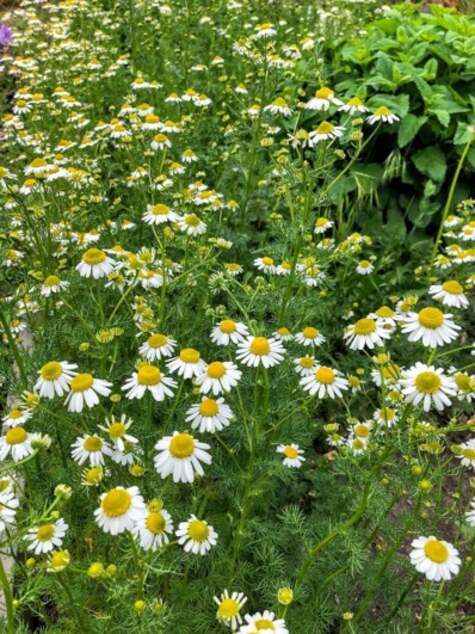
German Chamomile from Pixabay.com by zerin117
Roman chamomile: A similar looking perennial but has a hairy, shorter stem with a thicker leaf. The flower has a flatter cone. This is an evergreen species that spreads by creeping, rooting stems and can be aggressive. It can be used for a chamomile lawn, between pavers or other landscape design. Culinary wise it is used less frequently due to its bitter taste.
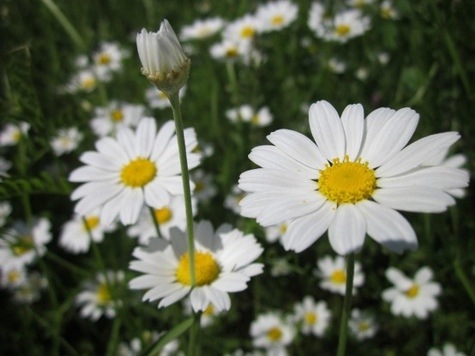
Roman Chamomile from Pixabay.com by wikimediaimages
Recipe: Chamomile Lemon Tea Ingredients: 1 tsp chamomile flowers (dried), 1 tsp lemon verbena (dried), ½ tsp fennel Directions: Blend herbs and steep in 1 cup of just boiled water for 5-10 minutes. (www.herbsociety of America. 2023)
Resources: Barrett, Judy, What Can I Do With My Herbs?, College Station, TX A&M Press,2009; www.cultivatedearth.com/en/herbs/how-to-harvest-chamomile accessed 1/22/26; Herb Society of America, Chamomile 2025 Herb-of-the-Year webinar accessed 1/14/25; www.en.Wikipedia.org/wiki/Athenus-cotula accessed 1/22/26; www.en.Wikipedia.org/wiki/Chamomile accessed 1/22/26; www.en.Wikipedia.org/wiki/Cota-tinctoria accessed 1/24/26; www.en.Wikipedia.org/wiki/Matricaria-discodia accessed 1/22/26; www.marthastewart.com/how-to-harvest-chamomile-1797725 accessed 1/22/26; www.gettyimages.com/photos/german-chamomile accessed 7/2/26; www.pexels.com/search/romanchamomile accessed 7/2/26; National Geographic Society, Complete Guide to Herbs & Spices, National Geographic Books, 2015.