by CMG Adrienne M

Indian Paintbrush, Castilleja coccinea, by CMG Ronnie K
No man can taste the fruits of autumn while he is delighting his scent with the flowers of spring. ~Samuel Johnson~
Despite our current drought, the sunshine and warming weather will bring the flowers, the colors and the scents of springtime. The beautiful dry weather allows for a walk around the neighborhood and in our many parks to catch what we can of this lovely time. Working in our gardens can be a wonderful and beneficial for our body and spirit.
Please don’t forget to enjoy your garden or other gardens during this beautiful time of year.
- If you don’t have a gardening journal, this would be a good time to start one. Pay attention to and make note of the way the sun moves around your yard. Areas in sunshine now may be in shadow in a few months, as the trees fill with leaves and the sun moves behind buildings. This will be a great asset to you in choosing and placing flowers and plants.
- Take a drive into the country to see beautiful Texas wildflowers. No matter what weather we’ve had there are always some wildflowers. Consider adding some to your landscape. It’s a good opportunity to visit a Hill Country winery to enjoy a sip for a lovely day’s outing.
- “Swinging by a garden center” to see what they’re featuring for warm season annuals or browse the garden center’s website and other online sources for annuals, seeds, perennials and shrubs.
- Online seed and flower sources have information for designs and creative ideas that we can use later.
- Make a list of those annuals to purchase later, such as transplants of wax begonia, celosia, coleus, Echinacea, Mexican heather, Penta’s, impatiens and geranium. Both marigold and salvia come in many colors, shapes and sizes to add interest to your yard or patios.
- If you have seeds of annuals such as amaranth, cosmos, cleome, periwinkle, zinnias and globe amaranth, it’s time to get them in the ground.
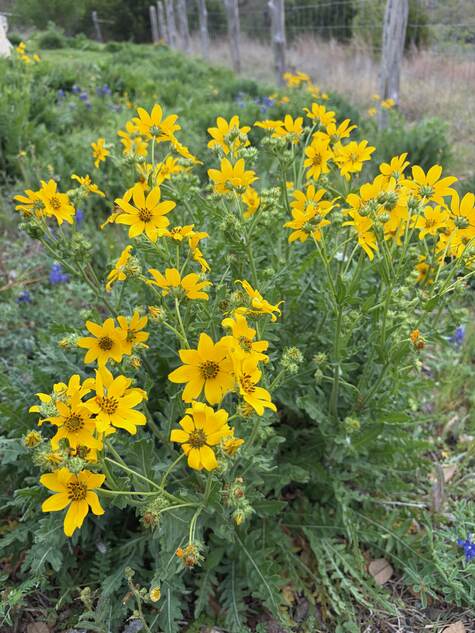
Engelmann’s Daisy, Engelmannia peristenia, by CMG Ronnie K
- For better success in plantings, select Texas Superstar® varieties, which have gone through rigorous testing by A&M for plant health, disease and drought resistance and blossom productivity. “New Look” celosia, a warm-season annual, is an older variety that was given Superstar® status in 2019. Its bright red plumes soar above dark, bronze foliage. “The contrast in the red and the bronze foliage is an eye-catcher. It has an exotic look that blends well with any landscape,” said Dr. Brent Pemberton of A&M’s Horticultural Research Center in Overton. It grows to 10-14 inches high with a 12-to-14-inch spread, prefers full sun (will tolerate light shade), needs good drainage and consistent moisture, and adapts to most soils.
- Not widely considered because of their simplicity, Sunflowers (Helianthus annuus) are easy to love and easy to grow from seed. Sow seeds directly into the garden, about 9-to-12 inches apart in full sun. They grow in a variety of heights and have a very large color range, from the palest lemon to dark gold, and are now available in new, darker colors such as chocolate cherry.
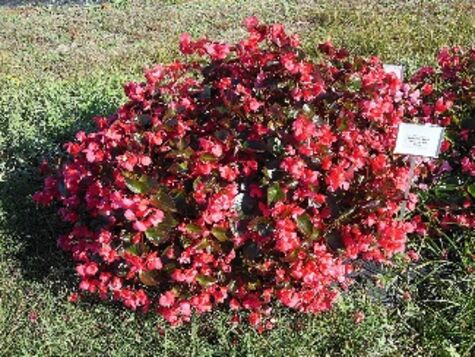
Whopper® Series Wax Begonia, Pink from Texas A&M Agrilife
- Another excellent Texas Superstar® and long-time staple of Texas landscapes is the Whopper® Series of Wax Begonias (Begonia x semperflorens–cultorum). This recently introduced series is a bigger, brighter ornamental, with large leaves on large plants and enormous flowers held well above the foliage for a showy display. Planted in the shade, these begonias can reach 24-to-30 inches tall with a spread of 12-to-16 inches; they will be somewhat smaller in direct sunlight. “Both the bronze- and green-leafed plants do well in direct sunlight in most regions, even through July and August. For the green-leafed variety, mid-afternoon shade or filtered light provides a good break from the summer sun,” said David Rodriguez, Bexar County AgriLife Horticulturalist and a member of the Texas Superstar®
- An olive tree makes a nice addition to a yard or patio, and can be left to grow in its natural form or shaped to resemble a mature tree. Texas A&M recommends “Arbequina Fruiting Olive” tree, the cultivar planted most in Texas to date. It can grow from 12-to-15 feet, bears small fruit, and is Spanish in origin.
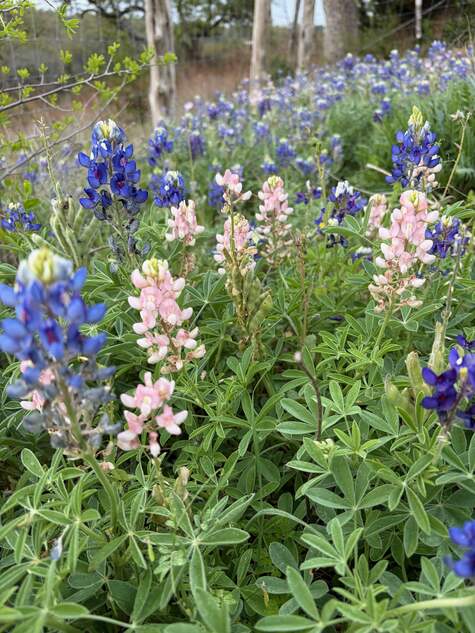
Pink Bluebonnets, Lupinus texensis, a color sport from CMG Ronnie K
- For small-space vegetable gardens, try the new ‘Honeybaby’ butternut squash, which has been bred to be compact but productive. An All-American Selections winner in 2017, these plants produce personal-size squash (4-to-8 ounces) on semi-bush plants with short vines. The plants are resistant to powdery mildew, which gives it another plus for Texas gardens.
- ‘Fairy Tale’ eggplant produces purple-and-white striped fruit, only 3-to-4 inches long. This dwarf AAS winner from 2005 reaches only 2-1/2 feet in height and can easily be grown in a large container on a deck or patio. There are two other AAS winner miniature eggplants: ‘Hansel’ (purple) and ‘Gretel’ (white).
- Some useful sources for gardening ideas, information, plants and seeds:
- Texas Superstar®
- Wave Gardening
- Plant Answers https://www.plantanswers.com (use the Information Index)
- Grow Beautifully with Monrovia (for more info, click “Inspiration”)
- Johnny Seeds
- The Texas A&M Earth-Kind® Gardening Index
- All-American Selections
Sources: Month-By-Month Gardening in Texas, Gill & Groom; Neil Sperry’s Complete Guide to Texas Gardening; The Southern Living Gardening Book; Comal County Gardening Guide; Vegetable and Herb Gardening for Comal County. Online: aggie-horticulture; plantanswers; monrovia; parkseeds; ballhorticultural; centraltexasgardener; milbergers; and others.