by CMG Adrienne M
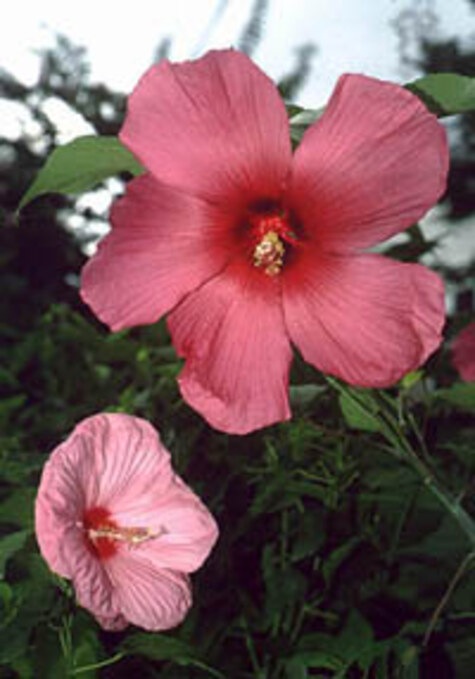
“Moy Grande”, perennial hibiscus from Texas A&M Superstar®
I like gardening — it’s a place where I find myself when I need to lose myself. ~Alice Sebold~*
It’s that time of year again, relaxing in the garden in the early mornings and evenings, and — preparing the yard and gardens for the heat of summer in South Central Texas! For the next three to four months, keep all of your plants, inside and outside, well hydrated. With recent glorious rains Mother Nature is helping us with that.
Time spent outdoors in the fresh air and sunshine can be highly therapeutic. Fresh scents in the early morning could be just the thing to improve our well-being. Go ahead, give it a try.
- Lawns often suffer from insufficient moisture. Because the amount of rain in this area is unpredictable, water lawns and trees well when rain is sparse.
- Heat stress and sun scald are very common right now, and plants need to be protected as much as possible. The vegetable garden especially will benefit from the shade of tenting, overhead layers of light material stretched over long poles or “umbrellas” made of old clothes line supports.
- Note the shade patterns around your home so that patio plants can be relocated to an area that will be protected from the afternoon sun.
- Some annuals will reach their peak and some will wither under our Texas sun. Consider replacing them with SunPatiens, an impatiens hybrid, that bloom in the sun all summer. Most have extra-large blossoms, and some have variegated foliage to add extra interest. Beware, they still do better protected from the harsh afternoon sun.
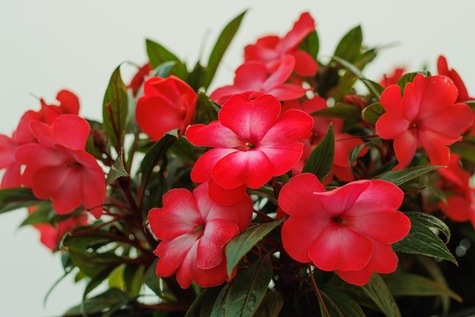
Sun Impatiens from Pixaby.com
- Also available for planting now is perennial hibiscus, a Texas Superstar® plant that “does great in any soil type.” Flare has fuchsia-colored flowers, Lord Baltimore has stunning red flowers, and Moy Grande has giant pink blossoms. For more information on perennial hibiscus, click here.
- If you are considering a design change for your garden, planting dwarf shrubs could be a solution. These charming ornamental bushes seldom grow taller than three feet and can be used to join or divide garden areas, or to conceal utility areas.
- Keep checking all plants for signs of pest problems. Look for tobacco hornworms, spider mites and stink bugs, especially in vegetable gardens. Be sure to enjoy your vegetable garden produce, and celebrate the hard work that got you here.
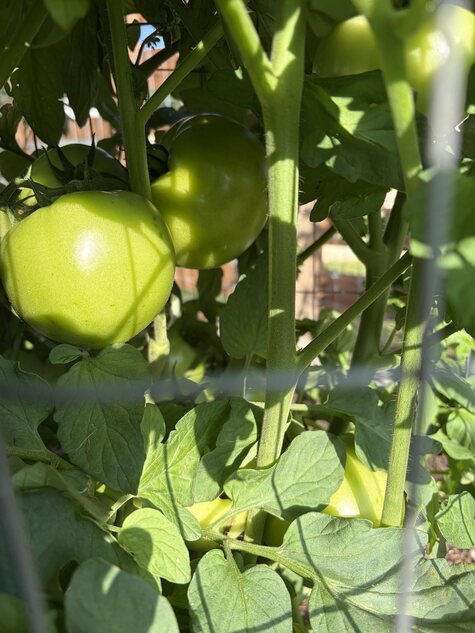
Tycoon, Rodeo Tomato 2011, setting fruit from CMG Ronnie K
- Keep up water and fertilizer routine for your vegetables. Be vigilant for pests and remedy as needed. Tomatoes, peppers, cucumbers and many other vegetables should be well along in developing strong plants and setting fruits. Harvest time is near.
- Harvest herbs for culinary needs and in vases to enhance flavor in your favorite dishes. They are thriving and do better when pruned regularly.
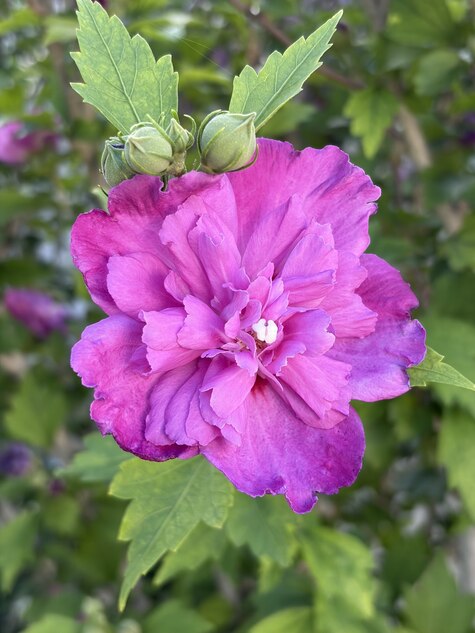
“Raspberry Smoothie” Rose of Sharon from CMG Ronnie K
- Give your flowers and vegetables a boost with Agricultural Molasses, a feed-grade, naturally-derived material made from US-grown sugar cane. It is high in nutrients and carbohydrates, and a source of calcium, magnesium, potassium, and iron. The natural sugar content will feed the microorganisms in the soil. Read more about this in the Comal County Gardening guides which are available at shops around the county.
- For ant control and garden pests such as snails and pill bugs, use food grade Diatomaceous Earth. Apply onto the top of an ant nest or on the ground at the base of affected plants. Reapply if application gets wet. Inexpensive plastic catsup/mustard bottles make excellent dispensers. It is safe for use inside the house. (Diatomaceous Earth is formed from the skeletal remains of diatoms, a common type of algae.)
- Keep your hummingbird feeders up and filled with fresh “nectar” every 3 to 4 days. The formula is easy: 1cup of white sugar dissolved in 4 cups cool water is all it takes to keep them happy. Some ‘hummers’ are on the move north, while some choose to make South Central Texas their home. Some butterflies also enjoy this free buffet! Clean the feeders regularly with warm soap and water.
- Be sure to pause a moment to enjoy the buzz of bees in the garden. With the abundance of flowers brought on by our recent magnificent and welcome frequent rains the pollinators are very active.
* Quote: Alice Sebold is an American novelist, English instructor and research analyst.
Resources: Comal County Gardening Guide ©CMG 2012; Month-By-Month Gardening in Texas, Groom & Gill. Online: aggiehorticulture; lsuagcenter; texasgardener; plantanswers..
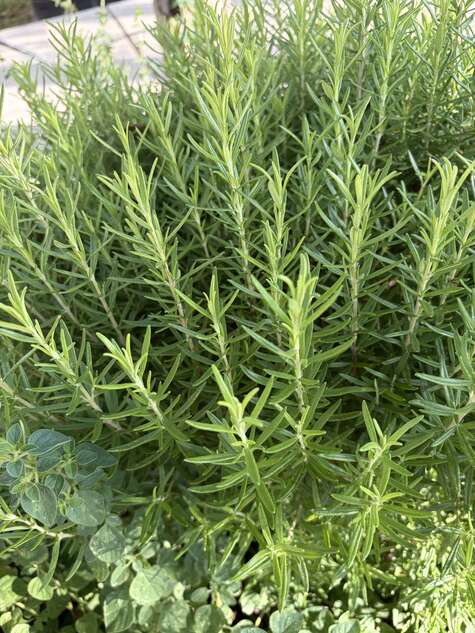
Rosemary, fully recovered from late winter pruning from CMG Ronnie K