by CMG Adrienne M
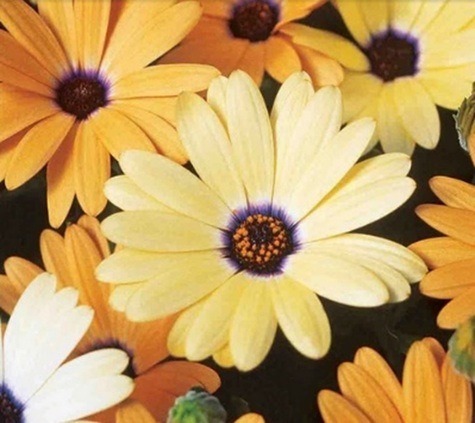
African Daisy, Osteospermum ‘MIxed Colors’ from Texas A&M Agrilife
Weather means more when you have a garden. There’s nothing like listening to a shower and thinking how it is soaking in around your green beans. ~Marcelene Cox~
In July, when showers don’t come, it’s up to us gardeners to intervene with plant saving measures, primarily deep watering and at least 3” of mulch for insulation and weed control. Lawns and trees will also benefit from deep watering, as will the shade plants coleus and caladiums.
- Remember to feed the hummingbirds! Many Black-chinned hummingbirds live year-round in South Central Texas. If you see aggressive territorial fighting around the feeder, simply put up another one, and enjoy. (nectar formula: 1 cup sugar dissolved in 4 cups cool water)
- Plants with deep roots, especially those that are well established, have a good rate of summer survival. The African Bush Daisy, Euryops pectinatus, is a member of the Asteracea family, with characteristics of common chrysanthemums. It will bloom with yellow daisy-like flowers summer through fall. This robust heat-resistant perennial bush can grow to 5 feet tall and up to 5 feet wide. Click here to learn more about the African Bush Daisy.
- The dwarf daylily Stella De Oro is another deep-rooted visual treat for the summer. It likes slightly sandy soil and partial to full sun where it forms neat, compact clumps that bloom with heavy clusters of 2½ inch yellow blossoms. If spent flower stalks are promptly removed, it reblooms freely into early fall. Once established, this perennial needs only occasional watering; more in extreme heat. Foliage clumps reach 1 foot tall, flower stalks to 2½ feet tall. Click here to learn more about the Stella De Oro daylily.
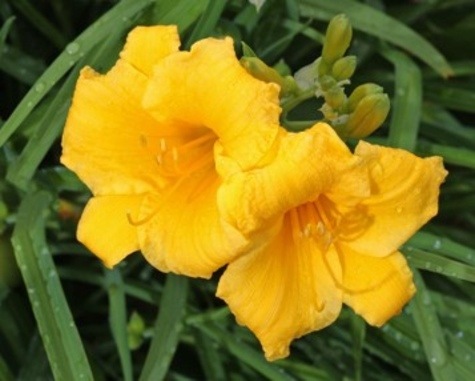
Stella de Oro from Pixabay.com
- Enliven an outdoor space instantly with the bright, saturated colors of begonias, petunias, geraniums and marigolds. They perform well in planters, hanging baskets and in the ground.
- Herbs such as basil, catnip, oregano, thyme, rosemary, peppermint, lemongrass, lemon balm and lemon verbena are also good choices for container gardening, adding a lively aroma to their visual texture. Consider planting trailing rosemary in a hanging basket.
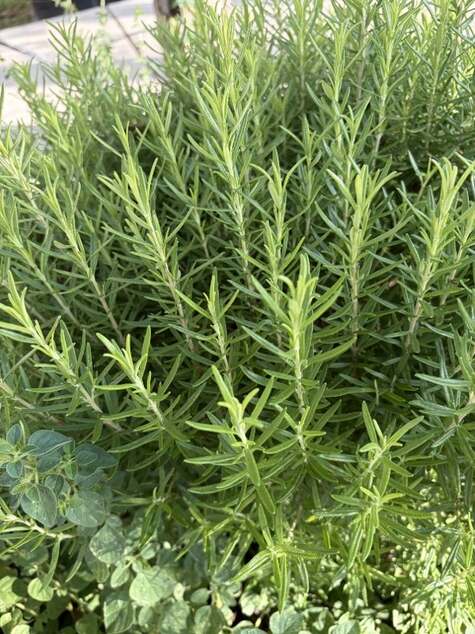
Rosemary surrounded by oregano by CMG Ronnie K
- Deadheading of annuals will produce more blooms; garden snips will make the job easier. Trim back overgrown or leggy spring-planted annuals such as petunias and impatiens to encourage new flushes of growth and renewed flower production. Add a slow release fertilizer and water well.
- Rose bushes should be checked for insect problems and fungus; a good prevention method is to prune interior areas to keep them open to circulation.
- Collect seeds from spring-blooming plants. Clean off the chaff and let dry indoors. Store in jars, envelopes, or paper bags (not plastic) to plant in November.
- It’s easier to control weeds if they are not allowed to go to seed. Pull them up before the seeds set.
- Walk through the garden in early morning to search for invading insects. This is a good time to spot stink bugs on tomatoes; check under the leaves for their eggs.
- There is still time to plant bush green beans, summer and winter squashes, “Southern” peas and transplants of peppers and eggplant. Begin preparations for a fall garden by removing those vegetable plants that are in decline. Some of the “southern” peas are blackeyed, cow peas, crowder peas, Lady peas and cream peas; despite the name, they are legumes. Planting them is you garden is a good way to avoid buying them in the can. Click here for a fine video from ‘Black Gumbo’ where you’ll learn about cow peas from seed to harvest.
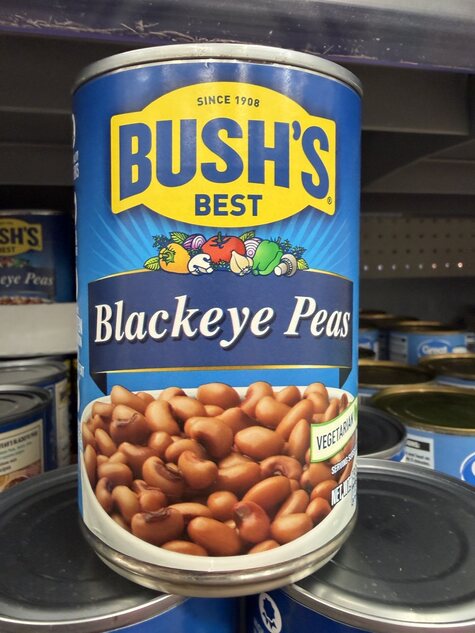
Blackeyed Peas by CMG Ronnie K
by CMG Adrienne
Sources: Comal County Gardening Guide © 2012, Month-by-Month Gardening in Texas by Dan Gill and Dale Groom © 2006, aggie-horticulture.tamu.edu. Online: Texas Gardener; Dave’s Garden.com; plantanswers, and other sites.