Exploring the Legacy of Ferdinand Lindheimer: A Visit to His Garden
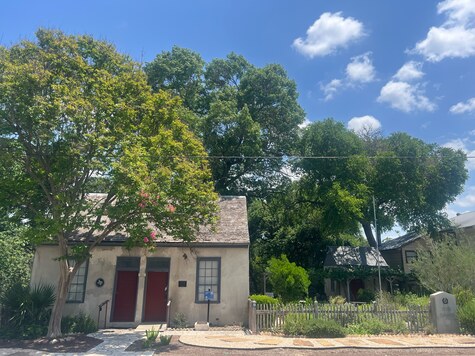
Lindheimer House by CMG Intern Jennifer N
Nestled in the heart of New Braunfels, Texas, the Lindheimer House offers a unique glimpse into the life and work of Ferdinand Lindheimer, the “Father of Texas Botany.” Beyond its historic architecture lies a treasure for plant enthusiasts: a garden, that serves as a living tribute to his legacy. This is a lovely museum and a Texas Historic Landmark.
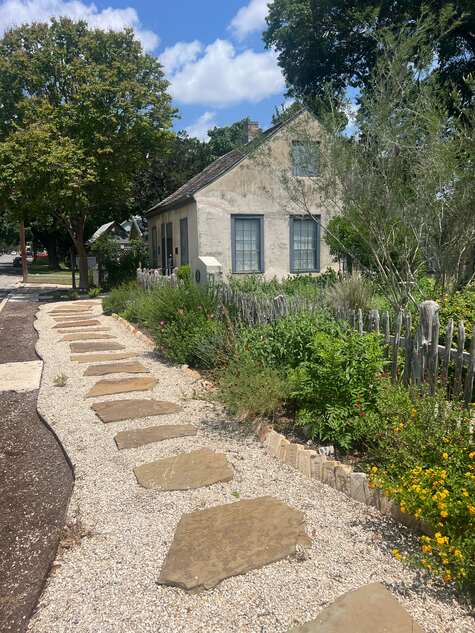
Lindheimer Garden by CMG Intern Jennifer N
A look back into his life
He was born in 1801 in Frankfurt, Germany. He began his career as a teacher before joining a group of radical academics during a time of political unrest. He escaped arrest after a failed uprising. Due to this, he fled to Illinois in 1834. He traveled down the Mississippi to New Orleans and on to Veracruz Mexico. He spent 1.5 years at a German colony working on a distillery operation and plantation that produced coffee while also collecting plants and insects. In 1835 he heard the news of the Texas Revolution and left by 1836. He intended to volunteer for the cause but was shipwrecked near Mobile, Alabama, before eventually reaching Texas. He finally arrived in Texas just after the decisive battle of San Jacinto April 21, 1836. He enlisted in the Texas army under John Coffee Hays until 1837.
After his service he farmed near Houston and in 1839 Lindheimer connected to botanists George Engelmann and Asa Gray. He agreed to collect and send more than 1500 Texas specimens over 9 years in return for financial support. Lindheimer maintained lifelong correspondence with Engelmann and Gray, sharing botanical discoveries, observations of local Native American cultures, travel tales, and even health advice. His letters—quoted in A Life Among the Texas Flora—reveal he was as much a naturalist as a storyteller.
In 1844, Lindheimer met Prince Carl Solms‑Braunfels and joined the German Adelsverein colony project in New Braunfels. He married Eleonora Reinartz in 1846, and they had four children together. He guided new settlers and was granted land by the Comal River, where he built a log cabin and later a fachwerk-style house. There he attempted to make his own botanical garden. Lindheimer became an editor for the local German-language newspaper which eventually turned into the Zeitung which he was publisher. He also ran a school for gifted children and served as the first justice of the peace for Comal County.

Lindheimer Garden Path by CMG Intern Jennifer N
Beauty in Botany
Over 13 years – He collected thousands of plant specimens, identifying over 1,500 species, nearly 50 of which now bear his name. His botanical discoveries laid the foundation for Texas botany, many popular native plants bear his name, such as Lindheimer’s senna (Senna lindheimeriana) and Lindheimer’s muhly (Muhlenbergia lindheimeri). These plants, along with others he identified, thrive in the garden that surrounds his historic home.
The historic Lindheimer House and gardens were built in 1852 in traditional German fachwerk. Today, the Lindheimer House is preserved as a museum and Texas Historic Landmark, operated by the New Braunfels Conservation Society. The Lindheimer House and Gardens are located at 491 Comal Ave. The gardens are open to the public, and house tours are available by appointment 830-629-2943. Guided tours are highly recommended for the full historical experience.
By visiting the Lindheimer House, you’re stepping into a piece of living history. The garden at the Lindheimer House showcases native Texas plants, emphasizing the beauty and resilience of species that Ferdinand himself might have documented. Visitors can marvel at blooming wildflowers, towering grasses, and robust shrubs that embody the spirit of Texas. Among the highlights are drought-tolerant species that not only support local wildlife but also demonstrate sustainable gardening practices. The garden serves as a vibrant classroom for understanding the importance of native plants in our ecosystems and a source of inspiration for anyone looking to incorporate Texas natives into their own landscapes.
Plants in the garden
Many of these plants still thrive in the garden today and many were originally discovered by Lindheimer in the wilds of Texas.
Muhlenbergia lindheimeri (Lindheimer’s muhly) – A striking ornamental grass, native to the Edwards Plateau.
Senna lindheimeriana (Lindheimer’s senna) – A tough, drought-tolerant shrub with golden yellow blooms.
Celtis lindheimeri (Lindheimer’s hackberry) – A small tree that supports local wildlife.
Oenothera lindheimeri (Lindheimer’s Gaura or beeblossom) – A delicate wildflower popular in native gardens.
Conoclinium coelestinum (Blue mistflower) — A pollinator magnet with fuzzy blue-purple flowers that bloom in late summer and fall.
Achillea millefolium (Common yarrow) — A hardy perennial with fern-like foliage and flat-topped flower clusters that attract beneficial insects.
Aquilegia canadensis (Wild red Columbine) — A spring-blooming native with nodding red-and-yellow flowers loved by hummingbirds.
Nolina lindheimeriana (Lindheimer’s devil’s shoestring) — A spiky, grass-like plant with long, tough leaves and a tall flowering stalk.
Malvaviscus arboreus var. drummondii (Turk’s cap) — A shade-tolerant shrub with red, hibiscus-like flowers that never fully open, attracting butterflies and hummingbirds.
Eupatorium perfoliatum (True common boneset) — A wetland native with fuzzy white blooms and distinctive leaves that wrap around the stem.
Callirhoe involucrata (Winecup) — A low-growing groundcover with bright magenta, cup-shaped blooms that open in full sun.
Whether you’re a history buff, a gardening enthusiast, or simply looking for a peaceful retreat, the Lindheimer House garden invites you to connect with nature and the legacy of a true Texas pioneer. Plan your visit today and witness the legacy of Ferdinand Lindheimer in bloom!
By CMG Intern Jennifer N.
Note: The Comal Master Gardener organization maintains the Lindheimer Garden. For more information read here.
Sources: Wikipedia, German Wikipedia, VisitNB.Com, GardenProfessors.com; Sophienberg.com; calflora.net