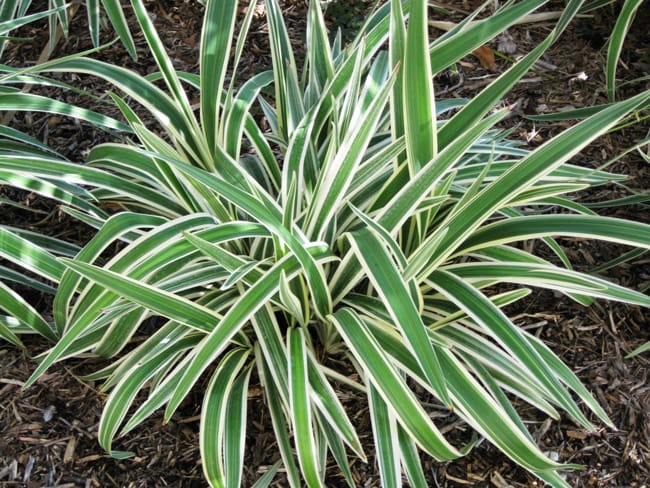
Flax Lily (Dianella genus)
by CMG Kathleen S.
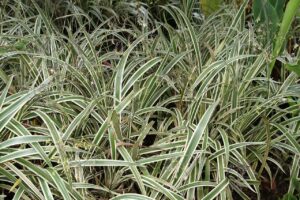
Dianella tasmanica var. variegata by David J. Stang from commons.wikimedia.org
Flax lily, is an eye-catching addition to any garden or landscape. It typically grows up to 2 feet tall and 3 feet wide. The leaves are upright and may be variegated in shades of green and white or yellow. Other varieties feature blue to burgundy foliage with silvery-gray tones. Some cultivars also produce ornamental berries. Companion plants include begonias, astilbes, caladiums, salvias and bear’s breeches. Flax lily works well as a border plant along walkways or as an accent around special garden features.
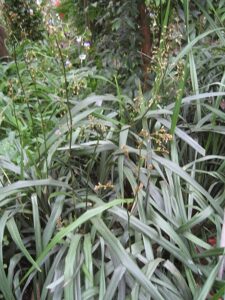
Photo by Christian Hummert, Dianella tasmanica Habitus from commons.wikimedia.org
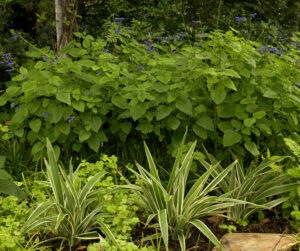
Flax Lily grouped with Salvia ‘Amistrad’, photo from centraltexasgardener.com
Flax lily is the common name for plants in the Dianella genus, although the terms are sometimes used interchangeably. The plants produce delicate flowers in shades of white, yellow, blue, or purple on slender stems above the foliage. Flax lilies may be grown outdoors or indoors. Outdoors, they are hardy in USDA Zones 9–11 and remain evergreen in warm climates. In Zone 8, discontinue nitrogen-based fertilizers in late summer or fall to help prepare plants for colder weather. Before a freeze, water thoroughly, but avoid overly saturated soil. Apply 4–6 inches of mulch around the plant, keeping mulch away from the crown. If a hard freeze is expected, cover plants with heavy fabric or tarps supported above the foliage if possible. Some gardeners also place lighted holiday string lights beneath the cover for additional warmth.
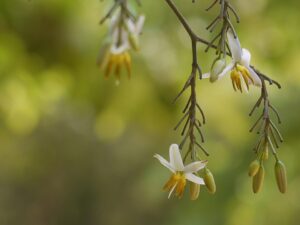
Blooms of Dianella tasmanica By Dinesh Valke from commons.wikimedia.org
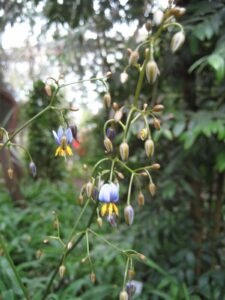
By Christian Hummert, Dianella tasmanica flowers from commons.wikimedia.org
Although flax lily is often described as a full-sun plant, leaves may scorch in the intense sun of Central Texas. Partial shade is generally recommended. The plant thrives in hot, humid conditions and prefers temperatures near 95°F. Fertilize in spring with a product formulated for acid-loving plants, such as azaleas. Soil should be well drained. Once established, flax lily is considered drought tolerant.
Potential problems include powdery mildew, leaf spot, and rust. Rust typically appears as orange patches on the leaves. Severely affected plants should be cut back to about 6 inches above the ground and treated with a copper-based fungicide.
Flax lily can also be grown indoors, although flowering indoors is uncommon. Maintain indoor temperatures between 60°F and 75°F. Increase humidity by placing the container on a tray of pebbles filled with water or by using a humidifier. Position the plant where it will receive bright, indirect light.
Indoor plants may occasionally develop spider mites, scale, or mealybugs. Careful watering is important, as excessive moisture can lead to root rot and salt buildup in the potting soil. Repot plants every two to three years, since flax lilies may become rootbound over time.
Flax lilies spread by rhizomes, and propagation is most successful by dividing rhizome clumps in spring.
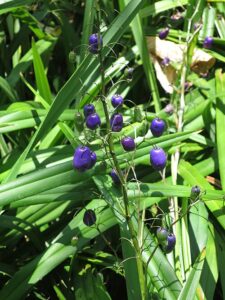
Purple berries of the Dianella_tasmanica from commons.wikimedia.org
The berries of flax lily are considered toxic to both humans and pets.
Visit this link for more information about Flax Lily Variegated, (Dianella tasmanica ‘Variegata’).
References: thespruce.com, bhg.com, greengardener.com, poisonsinfo.health.gov.au, and faithart.org