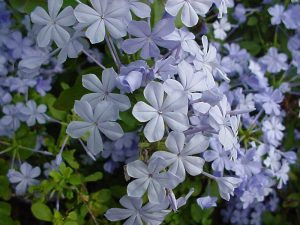
Plumbago (plumbago auriculata)
by CMG Kathleen S.
Plumbago, also known as leadwort, is native to South Africa, where it thrives in the region’s intense heat. In the United States, it grows well in USDA Zones 8 to 11, particularly in southern Texas and Florida. Once established, plumbago is drought-tolerant, but consistent watering helps promote more abundant and longer-lasting blooms. Plumbago is recognized as a Texas Superstar® plant.
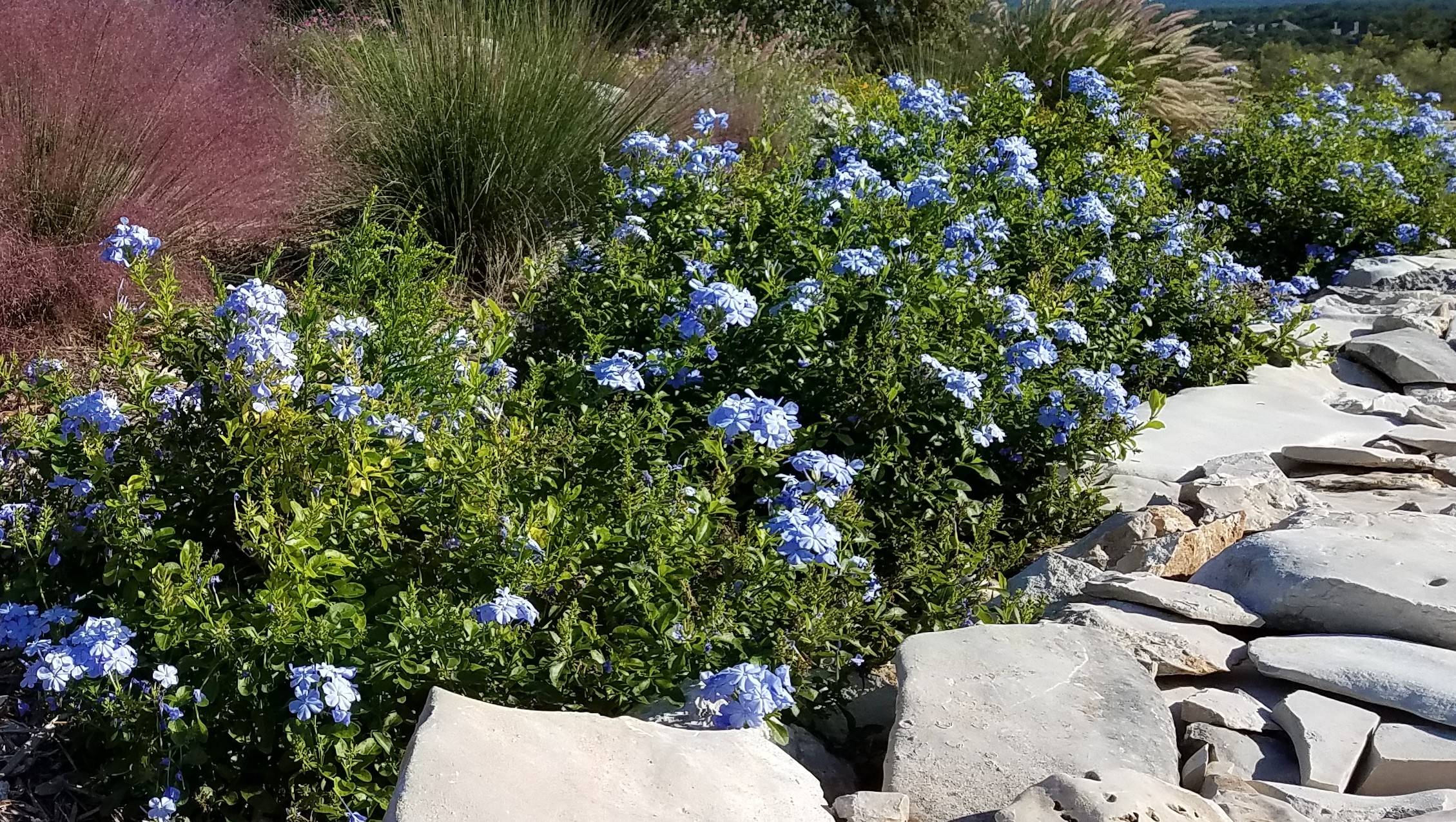
Photo by CMG Cheryl
While often grown in containers, Plumbago can also be grown as either a shrub or a vine. As a shrub, it typically reaches 6 to 10 feet tall and spreads 8 to 10 feet wide. To maintain the desired shape, regular pruning is recommended. Its vine-like branches can be trained to grow along trellises or support posts, though they will need to be tied in place for support. Another beautiful option is to let Plumbago drape naturally over fences, creating a soft, cascading effect.
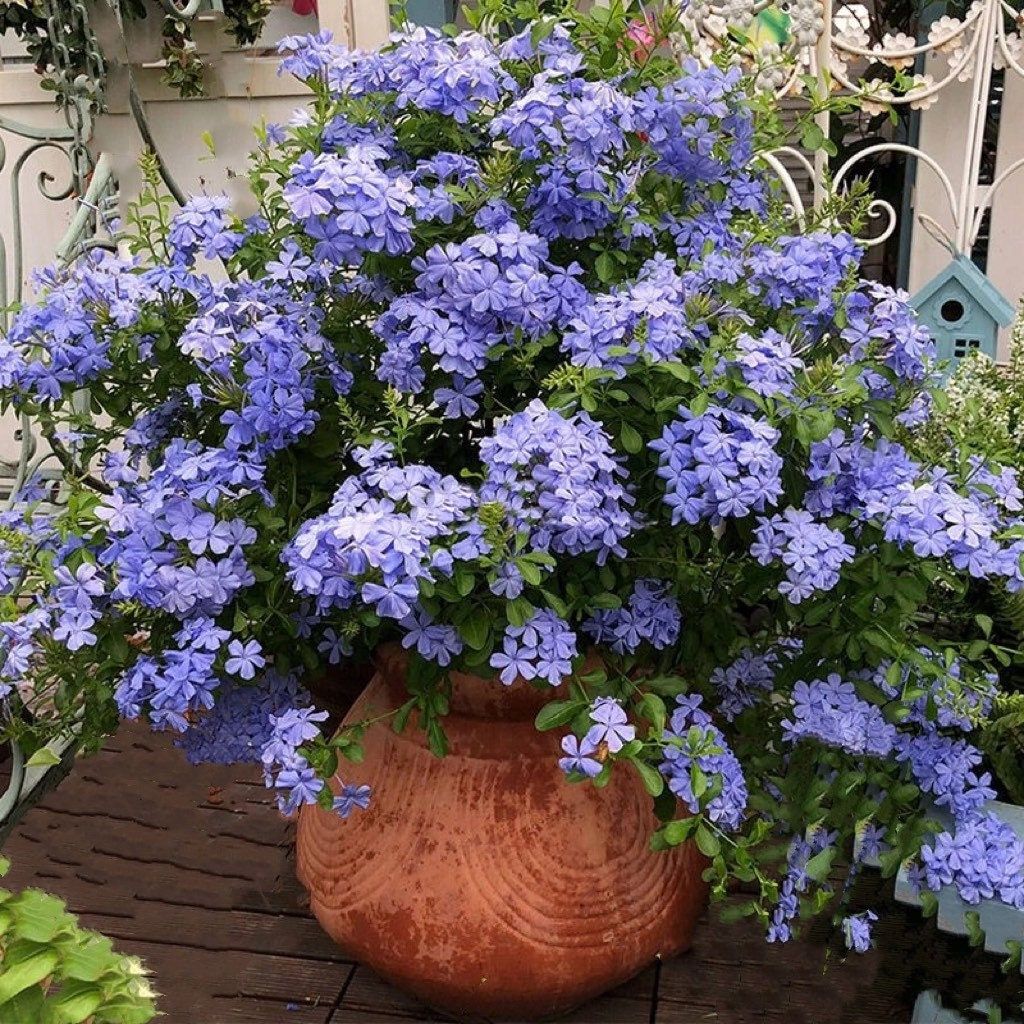
Photo from iStock
Plumbago has several interesting botanical traits that set it apart. Some varieties have leaves with a slightly sticky texture, caused by trichomes—tiny plant hairs that secrete a substance called mucilage. While mucilage is commonly found in many plants and plays a role in water and nutrient storage, in Plumbago, it’s believed to help trap and destroy insects, adding a natural layer of pest resistance.
Another curious feature is the presence of a white, powdery substance on the underside of some leaves. Although often mistaken for powdery mildew, this is actually a natural secretion and is not harmful to the plant.
Perhaps most notably, Plumbago is prized for its true blue blooms—a rarity in the plant world. It’s estimated that only about 10% of flowering plants produce flowers in a true blue hue, making Plumbago especially valuable in garden design. Blue flowers have a unique ability to enhance warm-toned plants, bring a sense of calm, and even make small spaces feel more expansive, offering a soothing and visually balanced landscape. White blooming Plumbago offers a beautiful alternative over blue.
Plumbago is a favorite among pollinators, especially butterflies, making it a great addition to wildlife-friendly gardens. It thrives in full sun to partial shade, but if planted in a shadier spot, it requires at least two hours of direct sunlight daily to bloom well.
This plant prefers slightly acidic, well-drained garden soil with good organic content. While Plumbago is heat-tolerant, it can also withstand temperatures down to 25°F, and its roots may survive as low as 10°F. In colder climates, Plumbago can be overwintered indoors—just place it in a bright room with plenty of natural light to keep it healthy until spring.
Fertilize Plumbago once in the fall and again in early spring to encourage healthy growth and vibrant blooms. Pruning is best done in late winter to early spring, just before new growth begins, since Plumbago blooms on new growth. Be sure to remove any dead or damaged branches and prune the shrub back by about one-third to maintain your desired shape and promote fuller flowering.
Plumbago can be propagated by cuttings. Choose a healthy stem 4 to 6 inches long, and dip the cut end in rooting hormone for best results. Plant the cutting in moist soil and place it in an area with bright, indirect light. Keep the soil consistently moist, and new sprouts should appear within 2 to 3 weeks. Avoid transplanting until at least two more weeks have passed to allow the roots to establish.
Plumbago can also be grown from seed but be aware that seed-grown plants may take up to two years to bloom.
In terms of safety, the ASPCA lists Plumbago as non-toxic to pets, though some sources suggest it may cause mild stomach upset if ingested. It’s best to use caution around pets and children. Gardeners should also wear gloves when handling Plumbago, as the plant produces a sticky, glue-like substance that can cause skin irritation in some individuals.
References: TheSpruce.com, en.wikipedia.org, Almanac.com, gardeningknowhow.com, thegardenfixes.com, vin.com, gardendust.com