by CMG Betty J
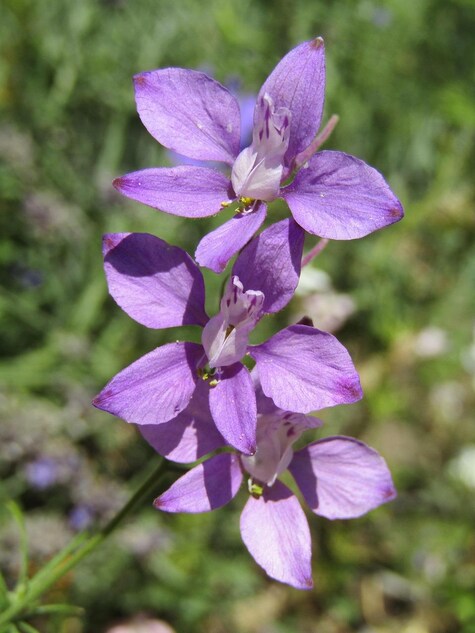
Prairie Larkspur from Pixabay by s-ms_1989
Prairie Larkspur (Delphinium carolinianum) is an erect perennial wildflower native to the Texas Hill Country. Plants found growing naturally in the region may belong to one of three subspecies, distinguished by their flower color and number of blossoms.
The name “larkspur” is derived from the flower’s shape, which is said to resemble the spur on a lark’s leg. Its Spanish common name, Espuela del Caballero, refers to its resemblance to a cowboy’s spur. Plants typically grow between 1 and 3 feet tall.
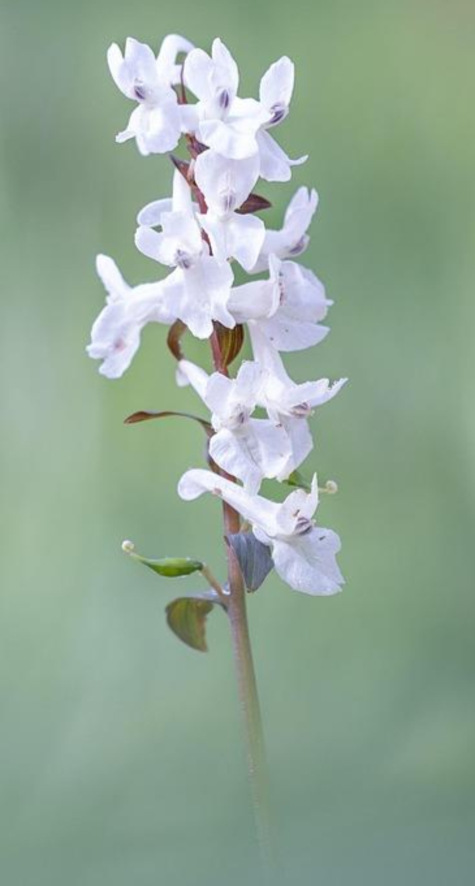
White Prairie Larkspur from Pixabay by bild_mike
The flowers, approximately 1 inch long and 1 inch wide, are composed of both petals and sepals and range in color from white to bright blue. Each blossom features four small central petals surrounded by five outer sepals. Flowers are borne on an unleafed stem and open progressively from the bottom upward. The leaves are about 3 inches long and wide, deeply divided into narrow segments, and occur both along the stem and at the base of the plant.
Prairie Larkspur grows throughout the Hill Country in pastures, grassy plains, and open woodlands. Its bloom period extends from April through June.
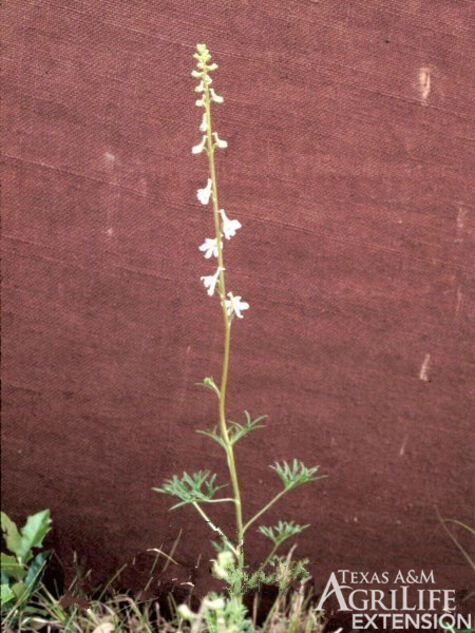
White Prairie Larkspur from Texas A&M Agrilife Extension
All parts of the plant are poisonous. Alkaloid concentrations causing the toxicity are highest in spring when the flowers first emerge and gradually decline as the plant matures. Cattle are particularly susceptible to these toxins.
Prairie Larkspur is an important nectar source for bumblebees and other pollinators. It reproduces readily from seed, and both seeds and nursery-grown plants are commercially available.
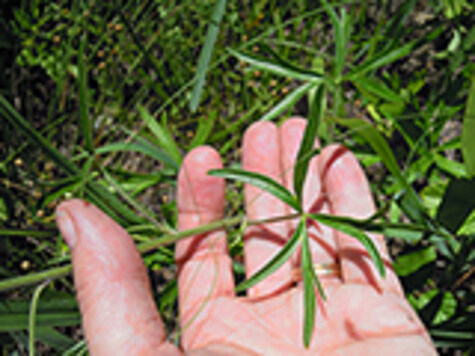
Prairie Larkspur Leaf