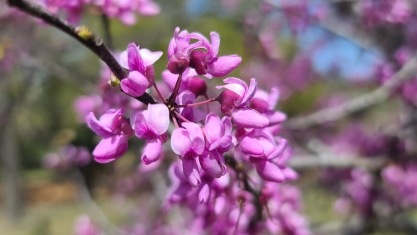
Redbud Trees (Cercis canadensis)
by CMG Kathleen S.
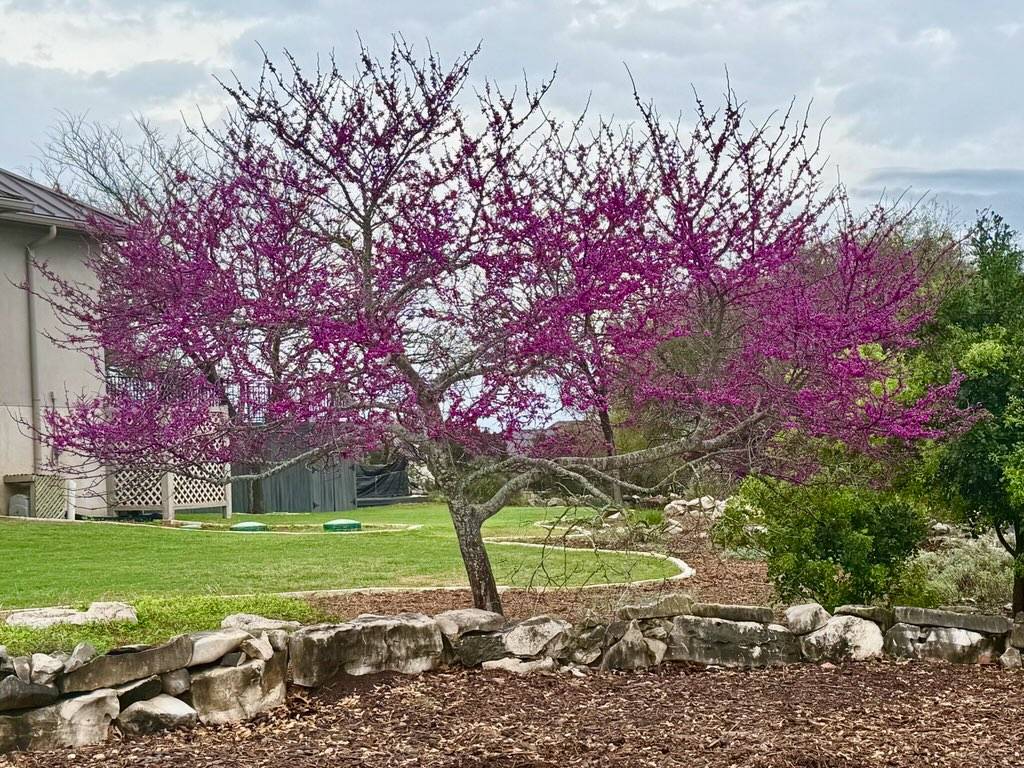
Texas Redbud by CMG Cheryl N
Redbud Trees: A Beautiful Choice for Central Texas Gardens
Redbud trees are an attractive and versatile addition to many landscapes. Depending on the species and growing conditions, these small, deciduous trees typically reach about 15 to 30 feet tall, making them an excellent focal point for a small yard. They also create a spectacular display when planted beneath taller trees, along the edges of wooded areas, or beside paths and walkways.
In early spring, usually March or April in Central Texas, vibrant pink, magenta, or occasionally white blooms appear along the branches and stems, often before the leaves emerge. The flowers give way to flattened seedpods that mature from reddish-purple to brown. Heart-shaped leaves provide summer greenery before turning yellow or other autumn shades, depending on the variety and growing conditions.
Growing Redbuds in Central Texas
Redbuds belong to the genus Cercis. Several species and varieties are available, but the Texas Redbud is particularly well suited to Central Texas and the Hill Country.
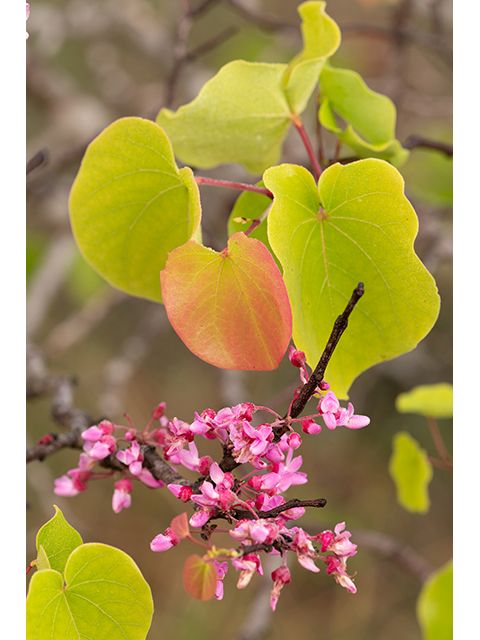
Texas Redbud leaves courtesy of Bruce from wildflower.org
Texas Redbud (Cercis canadensis var. texensis) is native to Texas and neighboring parts of the south-central United States and northeastern Mexico. It is well adapted to hot summers, alkaline soils, and periods of drought once established. Its glossy, leathery leaves help it conserve moisture, and its flowers range from pink to magenta or rose-purple. Texas Redbud generally grows about 15 to 20 feet tall, although size varies with growing conditions.
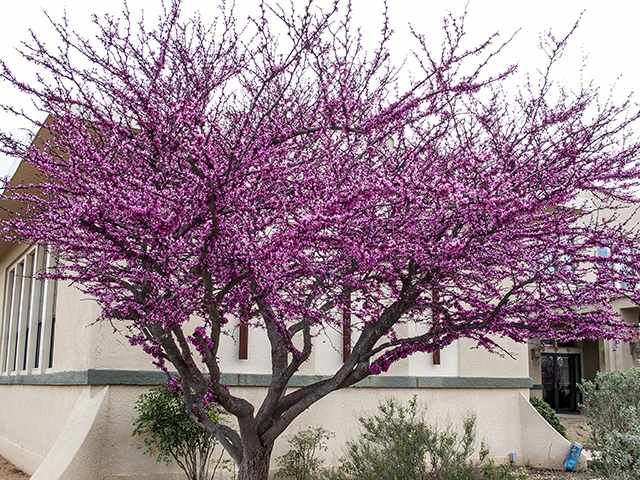
Eastern Redbud courtesy of Stephanie at wildflower.org
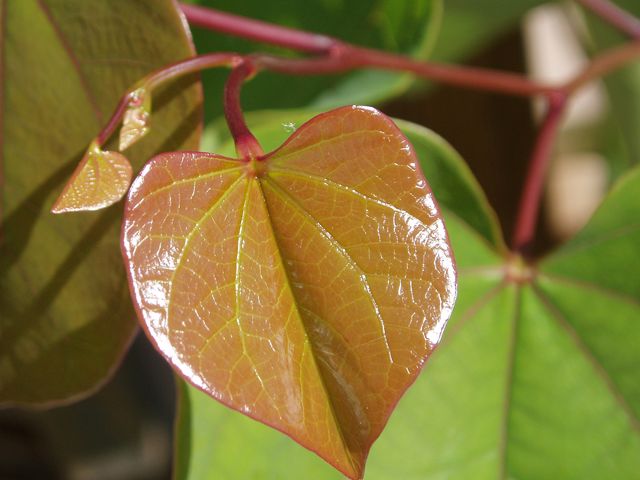
Eastern Redbud leaves courtesy of wildflower.org
Eastern Redbud (Cercis canadensis) is native primarily to eastern North America. It is known for its brilliant spring flowers and heart-shaped leaves, and it is hardy in a broad range of climates. However, it is generally less well adapted to Central Texas heat, alkaline soils, and prolonged drought than Texas Redbud.
Mexican Redbud (Cercis canadensis var. mexicana) is another option for hot, dry landscapes. It has smaller, often wavy-edged leaves and is particularly suited to arid conditions.
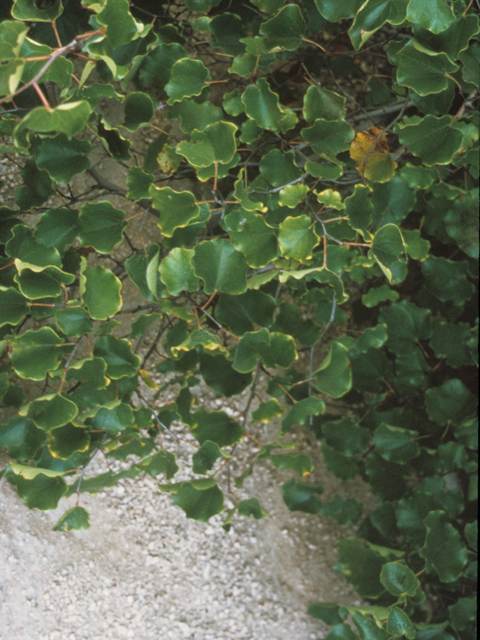
Mexican Redbud leaves courtesy of Sally from wildflower.org
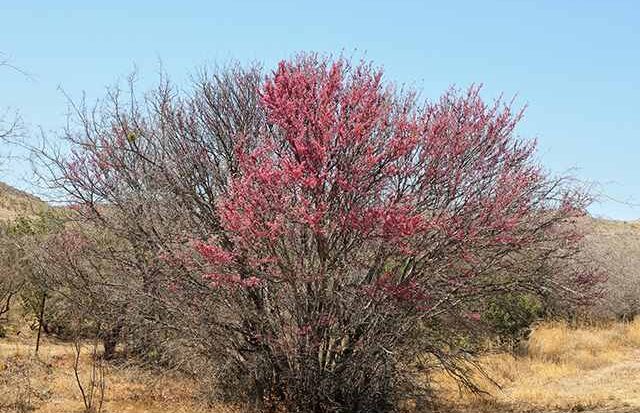
Mexican Redbud by Alan from wildflower.org
Redbud flowers provide an early-season source of nectar and pollen for native bees and other pollinators. Redbuds also serve as host plants for certain butterfly and moth caterpillars.
Planting and Caring for Redbuds
Redbuds grow in full sun to partial shade. In Central Texas, a location with morning sun and some protection from intense afternoon sun can help reduce heat stress, particularly during establishment. Choose a site with well-drained soil; Texas Redbud tolerates alkaline soils and does not require special soil additives when planted in a suitable location.
Fall and winter are generally good times to plant trees in Central Texas, provided the soil is workable and the tree can be watered as needed. Early spring is another option. Planting during cooler weather gives roots time to establish before summer heat arrives.
Allow adequate room for the tree’s mature canopy. Texas Redbuds often spread 10 to 15 feet or more, depending on the tree, so avoid planting them too close to buildings, walkways, or other trees. Follow the nursery’s recommendations for the particular variety you purchase.
Water newly planted trees regularly while their roots establish. Once established, Texas Redbuds are relatively drought tolerant, but they may still need supplemental watering during extended periods of hot, dry weather. A layer of mulch over the root zone can help conserve soil moisture; keep mulch away from the trunk.
Routine fertilizing is usually unnecessary unless a soil test or signs of poor growth indicate a nutrient deficiency. Excessive fertilizer, especially high-nitrogen lawn fertilizer, can encourage leafy growth at the expense of flowering.
Pruning and Potential Problems
Redbuds can be affected by fungal diseases, cankers, borers, scale insects, and caterpillars that feed on the leaves. Good drainage, appropriate watering, and proper pruning can help maintain tree health. Inspect trees periodically for damaged branches, discolored foliage, or signs of insect activity.
Redbuds flower on older wood, so heavy pruning before spring flowering can remove many of the season’s blooms. Prune after flowering when practical, particularly when shaping the tree or removing unwanted branches. Dead, damaged, or hazardous branches can be removed when necessary. Avoid removing more than about 25% of the living canopy in a single year, and use a more conservative approach for stressed or mature trees.
Redbuds and the Denton Redbud Festival
Redbuds are especially celebrated in Denton, Texas, known as the “Redbud Capital of Texas.” The Denton Redbud Festival has featured community activities, plant sales, and educational opportunities. The event is typically associated with spring, so check the City of Denton or Keep Denton Beautiful for current dates and activities.
Are Redbuds Safe Around Children and Pets?
Do not assume that seeds, seedpods, or other plant material are safe to eat. The claim that redbud seeds and pods specifically cause stomach problems in humans, cats, and dogs should be confirmed with a reliable toxicology or veterinary source before publication. As a general precaution, discourage children and pets from eating ornamental plant material. If a person or pet eats an unfamiliar plant and develops symptoms, contact an appropriate medical professional or veterinarian.
References:
bhg.com, the leafy place.com, npsof.org, leafypixels.com, cityofdenton.com, and plant4harvest