Bleeding Heart: A Beautiful Heirloom Plant with Special Needs in South Central Texas
by CMG Kathleen S.
Bleeding heart is not a plant commonly associated with South Central Texas, and for good reason. This beautiful, old-fashioned perennial has growing requirements that can be challenging in our Comal County climate. Our hot summers, periods of drought, rocky soils, and alkaline conditions are not exactly what this plant prefers.
However, for gardeners willing to give it a little extra attention, bleeding heart can be a delightful addition to a shaded garden.
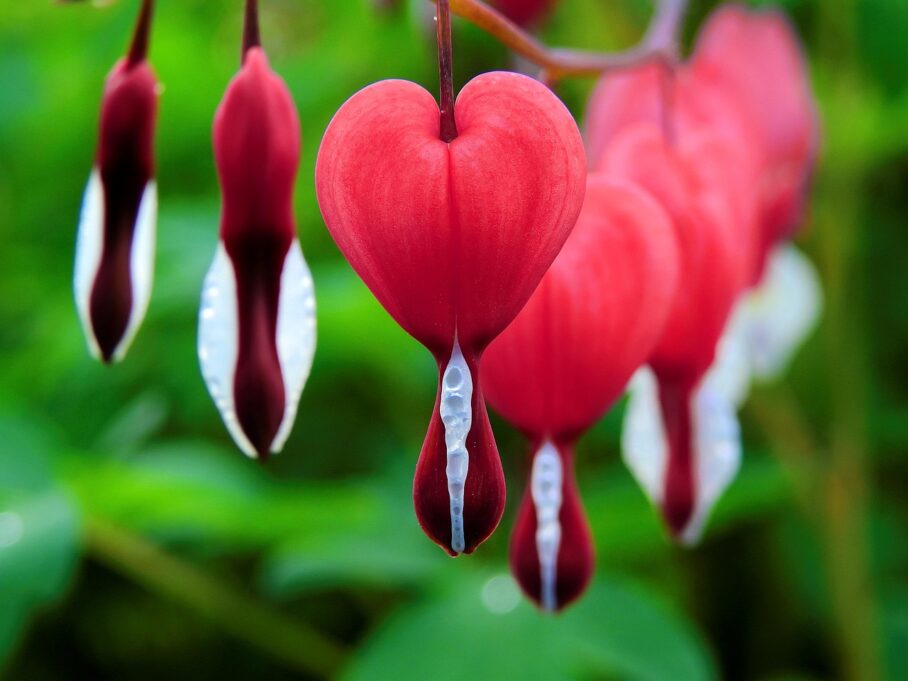
A favorite in gardens for generations, bleeding heart is admired for its unusual and striking flowers. The blooms resemble tiny hearts, with a small portion of the flower extending downward, giving the appearance of a heart that is actually bleeding. This dangling portion is usually white, while the heart itself may be red, pink, or white.
The flowers grow along long, graceful stems, creating a lovely display as they sway above the foliage. Individual flowering displays can last up to two weeks, depending on weather and growing conditions.
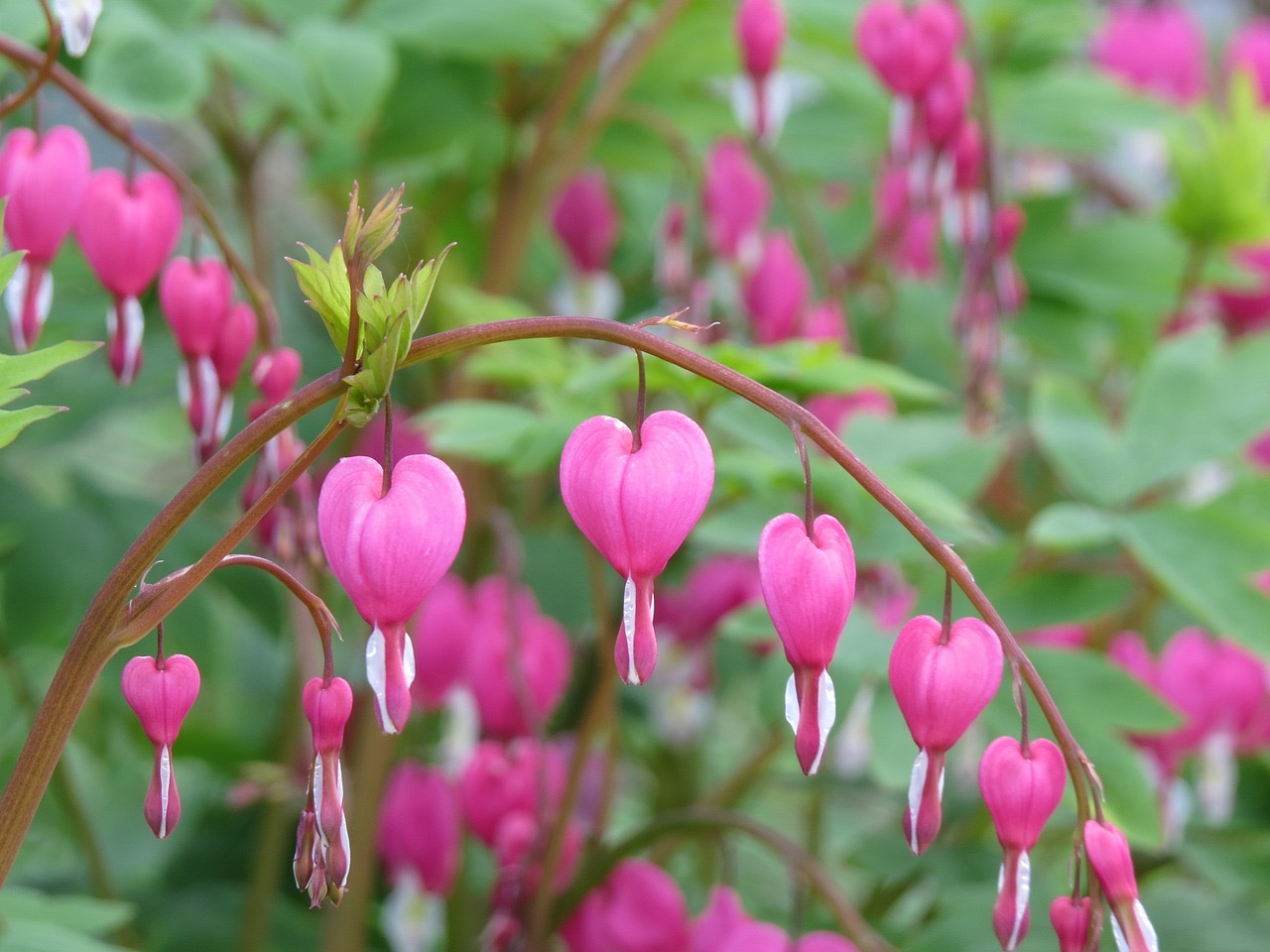
Bleeding Heart (Lamprocapnos spectabilis)from commons.wikimedia.org
Getting to Know Bleeding Heart
Traditional bleeding heart (Lamprocapnos spectabilis), formerly known as Dicentra spectabilis, is native to Asia and belongs to the poppy family. It is a herbaceous perennial that prefers partial shade, organically rich soil, and consistent moisture. Slightly acidic soil is generally preferred.
Although the traditional variety is not particularly well suited to our hot summers, there are several varieties and related species worth considering.
Varieties to Consider
Valentine Bleeding Heart
Valentine is a particularly striking selection, featuring deep red, heart-shaped flowers with white centers. It is hardy in USDA Zones 7–8, although growing it successfully in South Central Texas requires careful attention to soil moisture, drainage, and afternoon shade.
Its distinctive flowers make it an attractive choice for a protected garden bed, a grouping along a border, or a sheltered spot in a rock garden.
Fringed Bleeding Heart (Dicentra eximia)
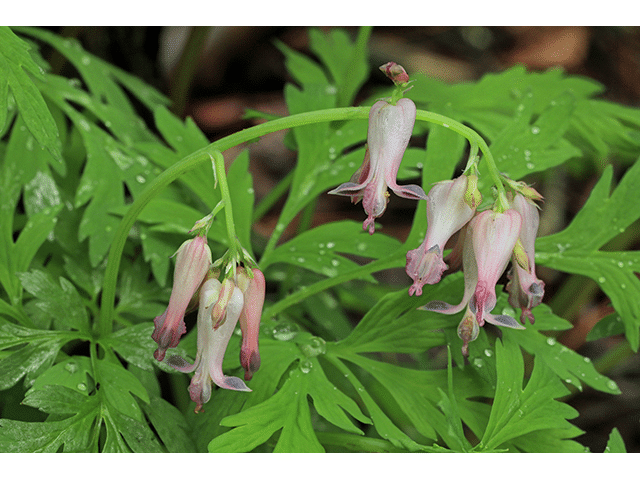
Photo from wildflower.org courtesy of Alan Cressler
This North American native is another interesting possibility for Texas gardeners. Its pink flowers have delicate white fringed edges, and it generally tolerates heat better than traditional Asian bleeding heart.
Hardy in Zones 3–9, fringed bleeding heart can flower over a longer period and does not necessarily go completely dormant during summer. It is worth considering for gardeners who want a longer-lasting display.
Burning Hearts
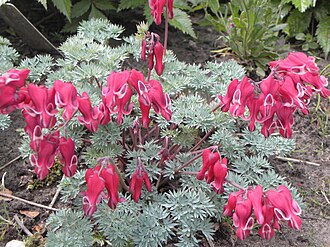
Dicentra Burning Heart, photo from commons.wikimedia.org
Another interesting selection is Burning Hearts, which features attractive pink-red flowers and silvery foliage. Its flowers are appealing to hummingbirds and other pollinators.
As with other bleeding hearts, provide afternoon shade and consistent moisture, especially during warm weather.
Planting and Growing Requirements
The most important consideration when planting bleeding heart in South Central Texas is location.
Choose a partially shaded area protected from intense afternoon sunlight and high winds. Morning sun with afternoon shade is generally preferable.
Prepare the soil with plenty of organic matter to improve its structure and moisture retention. Bleeding heart prefers soil that remains lightly moist but drains well. Avoid allowing the roots to sit in water.
When planting, position the crown just below the soil surface and water thoroughly. A layer of mulch will help maintain cooler soil temperatures and reduce moisture loss.
Container growing is another option, particularly for gardeners who want greater control over soil conditions and plant location. Container-grown plants may live four to five years before becoming root-bound, at which point they will need to be moved into a larger container or planted in the garden.
Understanding Summer Dormancy
One important characteristic of bleeding heart is its response to summer heat.
As temperatures increase, traditional bleeding heart may begin to yellow, die back, or become completely dormant. This is a natural part of its growth cycle and does not necessarily mean the plant has died.
For a more attractive garden, consider planting other shade-loving plants around it. Ferns and hostas can provide foliage and help fill the space after bleeding heart goes dormant. Choose companion plants suited to Central Texas conditions and the amount of available moisture.
Common Problems
Aphids can occasionally become a nuisance, particularly on tender stems and new growth. Insecticidal soap or neem-based products may be used according to label directions when treatment is necessary.
Powdery mildew can also develop, especially where air circulation is poor. Good spacing, avoiding overhead watering, and removing affected foliage can help reduce problems. A labeled fungicide may be considered if the problem persists.
Bleeding heart is toxic if eaten by humans or pets. Take care when selecting a planting location, particularly in gardens where children or animals may have access.
Propagation
Growing bleeding heart from seed can be difficult and requires patience. Purchasing established plants is generally the easiest approach for home gardeners.
Division of established plants is another propagation option, although it should be done carefully. Stem cuttings are not a universally reliable propagation method for these plants, so gardeners may have better results with division or nursery-grown plants.
Is Bleeding Heart Right for Your Central Texas Garden?
Bleeding heart may not be the easiest perennial to grow in Comal County, but its unusual flowers and old-fashioned charm make it tempting for gardeners who enjoy a challenge.
The key is to provide afternoon shade, organically enriched soil, good drainage, and consistent moisture during active growth. Selecting a more heat-tolerant species, such as fringed bleeding heart, may improve your chances of success.
This is one of those plants that reminds us gardening is sometimes about experimenting and finding just the right spot for a special plant. With a little extra care, bleeding heart can bring a touch of old-fashioned garden beauty to South Central Texas.