by CMG Betty J
The Texas Hill Country is home to a large array of wildflowers. From Texas Bluebonnets to Mexican Hats and Prickly Poppies, the countryside is awash with colorful blooms. Yellow flowers shine brightly, and none more than the yellow daisies including Sleepy Daisy, Lindheimer Daisy, Engelmenn Daisy, Cowpen Daisy, Huisache Daisy and Granite Daisy. They all thrive in the rocky soils of the Hill Country in disturbed fields and sunny meadows.
The Sleepy Daisy, Xanthisma texanum, is easily recognized by its habit of folding up its ray flowers in the evening and on cloudy days. It is found mostly on the Llano Uplift.
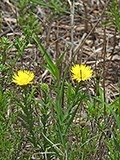
An open Sleepy Daisy, Xanthisma texanum
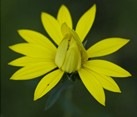
A Sleepy Daisy closing
The Lindheimer Daisy, also called the Texas Star, Lindheimera texana, is identified by its five ray flowers and 10-15 disk flowers.
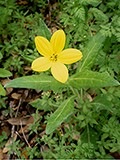
Texas Star, Lindheimera texana
The Engelmann Daisy, Engelmannia pinnafida, has eight ray flowers and coarse, upright lobed leaves growing from a rosette and a large tap root.
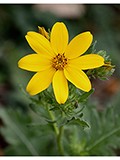
Engelmann Daisy, Engelmannia pinnafida
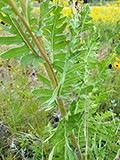
Leaves of the Engelmann Daisy
The Cowpen Daisy, Verbesina encelioides, is one of the larger daisies. They are 1’ – 4’ tall with flower heads 2 ½” wide, toothed ray flower and coarse, toothed leaves.
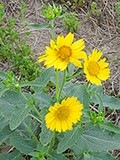
Cowpen Daisy, Verbesina encelioides
The Huisache Daisy, Amblyolepis setigera, is named for its habit of growing in thick clumps under stands of huisache trees. Each flower head consists of 8 – 10 toothed ray flowers.
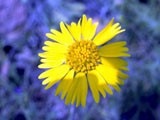
Huisache Daisy, Amblyolepis setigera
The Granite Daisy, Croptilon divaricatum, is most often found in the Llano Uplift. Also known as the Scratch Daisy, its small flower heads, 3/8” – 5/8”, have numerous oval ray flowers.
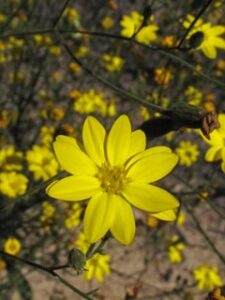
Granite Daisy, Croptilon divaricatum