by CMG Mellissa Z
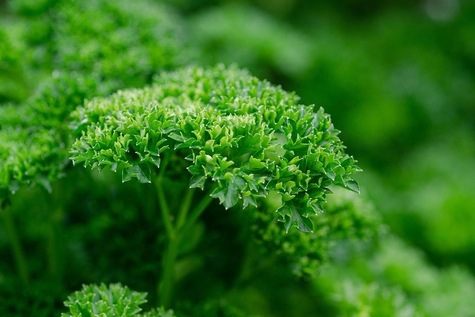
Curly Parsley from Pixabay.com by Katarina N.
Parsley: A Versatile Herb for Texas Gardens and Kitchens
Parsley is much more than a decorative sprig on the side of a plate. This flavorful herb is easy to incorporate into a Texas home garden, provides vitamins and minerals, and can be used fresh or dried in a wide range of dishes. Texas A&M AgriLife Extension resources offer practical guidance for growing, harvesting and using parsley in the home garden.
Parsley (Petroselinum crispum) is a biennial herb, meaning it produces leaves during its first year. It sets flowers and produces seeds during its second year. Two common varieties are flat-leaf or Italian and curly or French. Both types are available as seeds and transplants.
AgriLife Extension notes that parsley has dark-green, either curled or plain leaves and typically grows about 5 to 6 inches tall. It is particularly useful in Texas gardens because it tolerates some shade. The Texas Home Vegetable Gardening Guide lists parsley among vegetables suitable for gardens that receive less than full sunlight.
Parsley is also useful beyond the vegetable garden. AgriLife Extension explains that herbs can be grown in flower beds, rock gardens, borders and containers, making parsley a practical addition to ornamental as well as edible landscapes.
Growing Parsley in Texas
Parsley can be started from seed or purchased as a transplant. One challenge for gardeners is patience: parsley seeds can be slow to germinate. AgriLife recommends sowing parsley in early spring and spacing plants about 6 to 8 inches apart.
- Choose the site: A sunny, well-drained location is ideal, although parsley tolerates partial shade.
- Prepare the soil: Good drainage is important. Raised beds can be particularly useful where drainage is poor.
- Plant at the appropriate time: Texas planting dates vary considerably by region. AgriLife’s fall gardening guide lists parsley as a fall crop, with recommended planting dates ranging from September 15 in the northernmost region to December 1 in the southernmost region.
- Water consistently: AgriLife recommends about 1 inch of water per week for herbs when rainfall does not provide enough moisture. Mulch can help conserve soil moisture and suppress weeds.
- Avoid excessive nitrogen: A balanced fertilizer can be used, but AgriLife cautions against excessive nitrogen because it can encourage excessive vegetative growth.
Parsley is also relatively cold tolerant. It’s among the frost-tolerant vegetables for Texas and identifies it as a mid-season crop capable of withstanding temperatures below 32°F.
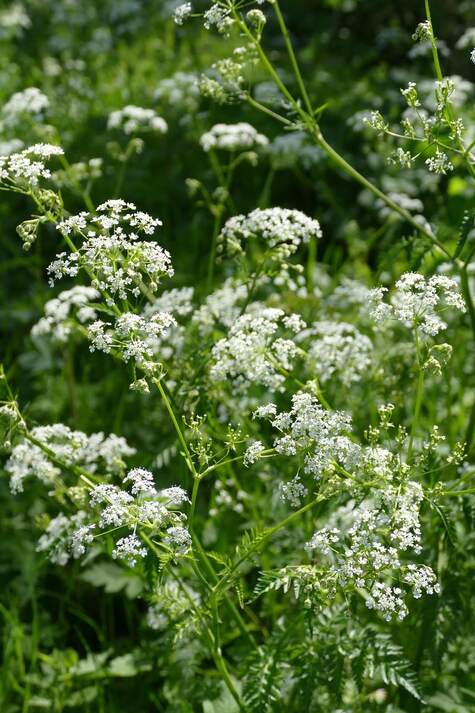
Parsley Flowers from Pixabay.com by Fran Dekkers
Companion Planting with Parsley
Companion planting is the practice of growing different plants together to make efficient use of garden space or create complementary growing conditions. It is important, however, not to assume that every traditional companion-planting claim has been scientifically demonstrated.
Texas A&M AgriLife’s home-gardening guidance provides a useful way to think about parsley’s companions. Parsley can tolerate partial shade and is relatively short, so it can be positioned near taller crops without necessarily competing for all available sunlight. Place tall crops such as staked tomatoes on the north side of a garden so they do not shade lower-growing crops.
Parsley can fit conveniently into mixed plantings with crops such as tomatoes, peppers, carrots, onions, lettuce and other garden vegetables. These plants appear together in AgriLife’s Texas home-garden recommendations, although AgriLife does not claim that parsley provides a special pest-control or yield-boosting effect for each of these crops.
A practical companion-planting approach is to place parsley where it receives adequate light and airflow while using garden space efficiently—for example, along the edge of a vegetable bed or among taller crops where appropriate.
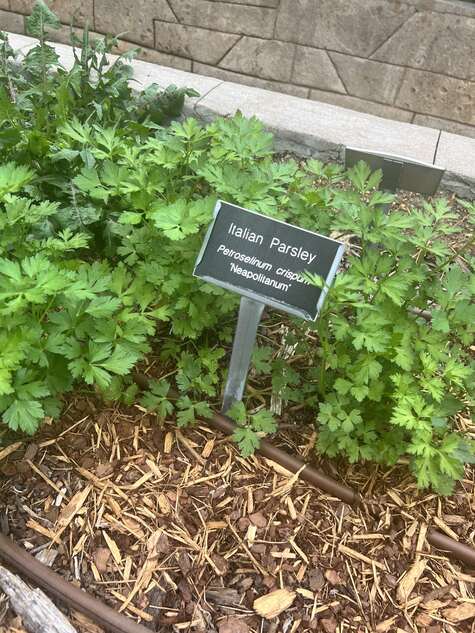
Italian Parsley by CMG Mellissa Z.
Harvesting Parsley
One of parsley’s advantages is that you do not have to harvest the entire plant at once. Remove outer leaves as needed rather than stripping off all the foliage in one harvest. This allows a well-maintained plant to continue producing for an extended period.
Harvest mature leaves throughout the growing season. Fresh parsley can be used immediately for seasoning, while the leaves can also be dried. Parsley leaves can be cut and dried at any time.
For drying, hang herbs in loosely tied bundles in a well-ventilated area or spreading leaves on screens or trays. Once completely dry, store them in airtight containers in a cool, dark location.
Health Benefits of Parsley
Parsley is often used in relatively small quantities, but that does not mean it lacks nutritional value. Texas A&M AgriLife Extension notes that parsley is loaded with vitamins and minerals.
Because parsley is generally used as a seasoning or garnish, its nutritional contribution depends on how much is consumed and how it is prepared. Adding fresh parsley to salads, vegetables, soups, meats and other dishes is an easy way to increase the variety of plant foods in the diet while adding flavor without relying solely on salt.
AgriLife’s herb resources emphasize the culinary role of herbs: they can add flavor and zest to foods, allowing cooks to make flavorful meals with relatively small amounts of the herb.

Cooking with Parsley from Unsplash.com by Yaov Aziz
Bringing Parsley from Garden to Table
Parsley is a particularly useful herb for Texas gardeners because it combines relatively simple growing requirements with a long harvest period and many culinary uses. Whether grown in a raised bed, vegetable garden or container, parsley can provide a steady supply of fresh leaves for salads, soups, sauces, vegetables and meat dishes. Rather than treating parsley as merely a garnish, gardeners can make it a regular ingredient—putting a homegrown herb to work from the garden all the way to the dinner table.
Texas A&M AgriLife Extension Resources
- Growing Herbs in Texas — growing, harvesting and preservation guidance.
- Texas Home Vegetable Gardening Guide — Texas planting, spacing and garden-planning information.
- Herbs Made Easy — an AgriLife booklet covering growing, harvesting, cooking and preserving herbs, including parsley.
- Fall Vegetable Gardening Guide for Texas — regional Texas planting and harvesting guidance.